


Blue light therapy is quickly becoming a popular way to tackle acne, but how long should you use it to see real results?
Whether you’re hoping for a fast fix or a long-term solution, nailing down the right treatment schedule is key.
We’ll lay out exactly how long and how often you should do blue light therapy to fight acne effectively, helping you feel confident in your skincare routine.
Key Notes
- In-office treatments last 15-30 minutes, with at-home sessions around 10-20 minutes.
- Use blue light therapy 2-3 times weekly for 4-6 weeks for best results.
- Daily at-home treatments can help maintain clearer skin long-term.
How Long Should Each Blue Light Therapy Session Be?
When it comes to blue light therapy, session duration can vary depending on whether you’re visiting a dermatologist or using an at-home device.
Here’s what you can generally expect:
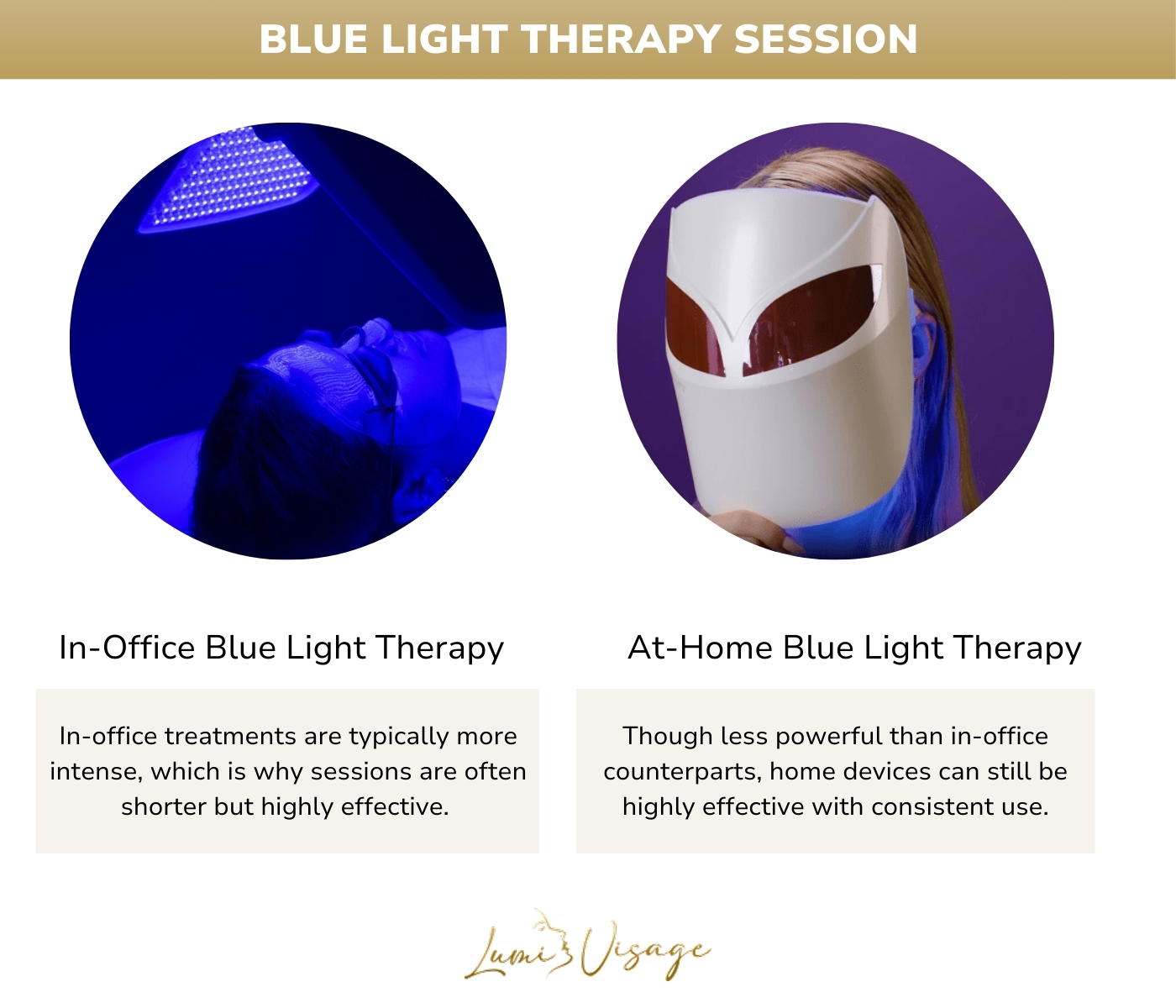
In-Office Blue Light Therapy
If you’re receiving treatment from a professional, in-office sessions tend to last between 15 and 30 minutes.
During this time, a dermatologist will use a specialized device to pulse blue light across the areas affected by acne. In some cases, a photosensitizer may be applied beforehand to enhance the light’s effects.
In-office treatments are typically more intense, which is why sessions are often shorter but highly effective. These treatments use more powerful light sources than at-home devices, and the results may become apparent faster.
At-Home Blue Light Therapy
If you’re using a blue light therapy device at home, each session may last around 10-20 minutes.
While these devices are generally less powerful than their in-office counterparts, they can still be highly effective when used consistently. Home devices can range from full-face masks to handheld pens for spot treatments.
The key to success with at-home treatments is ensuring that you follow the manufacturer’s instructions regarding session duration and frequency.
Some devices are designed for daily use, while others recommend less frequent treatments. It’s important not to overdo it, as excessive exposure may irritate your skin.
How Often Should You Use Blue Light Therapy?
Consistency is crucial for seeing results from blue light therapy. Most experts recommend a treatment schedule based on a twice-weekly or thrice-weekly routine.
Let’s break it down:
In-Office Treatment Frequency
If you’re opting for dermatologist-led blue light therapy, sessions are usually scheduled 2-3 times per week, lasting for 4-6 weeks.
This cadence gives the light time to work on bacteria and inflammation while allowing your skin to recover between sessions.
After this initial treatment phase, many dermatologists suggest maintenance sessions every few months to keep acne at bay, especially for individuals prone to chronic breakouts.
This continued care ensures that the treatment’s benefits are sustained long-term.
At-Home Treatment Frequency
For at-home devices, treatments are often recommended daily or 3-5 times a week for about 4-6 weeks.
While this might sound like a lot, the devices are designed for consistent use without overwhelming the skin, as long as you don’t exceed the recommended exposure time.
After the initial treatment phase, some devices suggest continuing with less frequent sessions — perhaps once or twice a week — for maintenance.
This ongoing use helps prevent future breakouts by keeping bacterial levels in check.
Ready To Clear Up Stubborn Acne Without Harsh Chemicals?
Our LED therapy mask tackles all your skin concerns safely and effectively.

When Will You See Results?
Blue light therapy isn’t an overnight fix, but with patience, results will come. Most people start noticing improvements after 4-6 weeks of consistent treatment.
Some may see a reduction in acne after just a few sessions, but maximum results typically require several weeks of commitment.
During the initial treatment phase, it’s important to maintain the schedule advised by your dermatologist or the device manufacturer.
How Long Should You Continue Blue Light Therapy?
Once you’ve completed the initial 4-6 week treatment cycle, many individuals find that their skin is significantly clearer. However, acne is a chronic condition for many people, meaning ongoing maintenance is often necessary.
For those using at-home devices, cutting back to once or twice a week can help keep breakouts at bay. The continued use of blue light helps to control bacterial levels and reduce sebum production, which can minimize future acne flare-ups.
It’s also worth noting that blue light therapy can be combined with other acne treatments to enhance its effectiveness. Some people use it alongside topical creams or other therapies like red light, which can help with acne scars and skin regeneration.
Potential Side Effects & Safety Considerations
One of the major draws of blue light therapy is its minimal side effects. Most people tolerate the treatment very well, but there are a few things to keep in mind.
Common Side Effects
The most common side effect of blue light therapy is temporary redness or dryness, especially if you have sensitive skin.
This is usually mild and subsides within a few hours or days. You can help mitigate dryness by using a good moisturizer and avoiding harsh skincare products like retinol or exfoliants immediately after treatment.
Sun Sensitivity
Blue light therapy can make your skin more sensitive to the sun for a few days after treatment.
It’s essential to wear sunscreen and avoid prolonged sun exposure, especially if you’re undergoing photodynamic therapy (a version of blue light therapy used with a photosensitizing agent).
At-Home vs. In-Office Risks
At-home devices are generally considered safe for most skin types, but it’s important to use them correctly. Follow the instructions carefully, and avoid overusing the device, as this can lead to irritation.
Dermatologists recommend wearing eye protection during treatment to avoid accidental damage.
If you’re uncertain whether blue light therapy is right for you or you’re considering combining it with other treatments, it’s always a good idea to consult a dermatologist first.
Frequently Asked Questions
Can blue light therapy help prevent future breakouts?
Yes! Blue light therapy not only targets existing acne but also helps prevent future breakouts by reducing the bacteria on your skin and regulating oil production. This makes it a great long-term acne management tool.
Does blue light therapy help with acne scars?
While blue light is mainly used to treat active acne, combining it with red light therapy can help improve acne scars. Red light promotes collagen production, which can reduce the appearance of scars over time.
Can I combine blue light therapy with other acne treatments?
Absolutely. Many people use blue light therapy in combination with topical treatments like salicylic acid or benzoyl peroxide. Just be cautious and consult with a dermatologist to avoid skin irritation from over-treating.
Is blue light therapy safe for all skin types?
Yes, blue light therapy is generally safe for all skin types. However, people with very sensitive skin or certain conditions like lupus or porphyria, which cause light sensitivity, should consult a doctor before using it.
Conclusion
Blue light therapy is a powerful, non-invasive way to get acne under control.
For optimal results, aim for 2-3 treatments a week over 4-6 weeks. At-home devices make it easier to stick to this routine, offering a convenient way to manage breakouts without disrupting your day.
Ready to get started? Our 7-Color LED Face Mask helps you target acne while improving overall skin health, giving you the clear complexion you deserve.