


There’s a lot of talk about how light affects sleep, but red light tends to sit in the grey area. Some say it helps you relax, others worry it could mess with your sleep cycle.
The truth is a little more nuanced.
So, why shouldn’t you sleep with red lights on – and when can it actually help? Here’s what the research says about red light, melatonin, and the kind of sleep that feels restorative.
- Darkness beats red light for deep sleep.
- Red light therapy sessions work best 1-2 hours pre-sleep, not overnight.
- Blue light suppresses melatonin strongly; red light causes minimal suppression.
- Keep nightlights extremely dim, indirect, and below eye level if needed.
Light And Sleep 101
Circadian Rhythm Basics
Your internal 24‑hour clock lives in the suprachiasmatic nucleus (SCN). It listens to light signals coming from special retinal cells called intrinsically photosensitive retinal ganglion cells, or ipRGCs.
Those cells contain melanopsin and are especially responsive to short wavelengths in the blue range. When they’re stimulated in the evening, your clock thinks it’s still daytime and delays the “sleep time” signal.
Melatonin’s Role
Melatonin is the hormone that tells the body it’s nighttime. It acts mainly on MT1 and MT2 receptors in the SCN.
MT1 helps with sleep onset by calming neuronal firing; MT2 fine‑tunes timing.
Melatonin isn’t a knockout pill. It’s a timing cue. Light in the evening suppresses melatonin, pushes your sleep later, and can chip away at sleep quality.
Day vs Night Exposure
Daylight (the real stuff) is your best friend. Bright morning and daytime light help anchor your rhythm, shorten sleep latency at night, and improve sleep efficiency and slow‑wave sleep.
Artificial light at night does the opposite: it delays the circadian phase, lengthens the time it takes to fall asleep, and increases the odds of nighttime awakenings.
Should You Sleep With Red Lights On All Night? Pros & Cons
Potential Upsides
- Less melatonin suppression compared with white or blue light at the same brightness.
- Useful for safety lighting so you can navigate a room without fully waking yourself up.
- May help with pre‑sleep relaxation when used in the evening routine.
Potential Downsides
- Even red light can increase micro‑arousals in sensitive sleepers, leading to lighter, more fragmented sleep.
- Some evidence points to REM pattern changes and mood effects in insomnia cohorts after night exposure.
- Long or repeated exposures can shift circadian timing over days, especially in the early morning.
Verdict
Darkness is still best for overnight sleep. If you need a nightlight, pick red or amber, keep it extremely dim, keep it out of your line of sight, and point it toward the floor or wall.
Blue vs Red: What Changes In Your Brain And Body
Blue Light (about 460 to 480 nm)
Blue light strongly activates melanopsin in ipRGCs. That ramps up alertness, body temperature, and heart rate and suppresses melatonin.
Translation: more awake, later bedtime, sketchier sleep.
Red Light (about 610 to 750 nm)
Red light is on the long‑wavelength end of the spectrum and is far less efficient at triggering melanopsin. That’s why red or amber light is often suggested at night when you need visibility without blasting your circadian system.
Some studies even show evening red light exposure can support sleep onset and subjective sleep quality in healthy people.
Brightness Matters Too
Color isn’t the only lever. Lux matters. A very bright red light can still disturb sleep compared to a very dim one.
A simple rule: the dimmest light that lets you do what you need to do wins. Indirect light beats a bulb shining straight into your eyes every time.
Timing Rules: When Red Light Helps & When It Hurts
- Best timing: Use red light in the last 1 to 2 hours before bed as part of a wind‑down. That timing lets melatonin rise while avoiding the alerting hit of blue light.
- Not ideal: Leaving any light on all night unless you truly need it for safety. If you must, go as dim as possible and indirect.
- Morning considerations: Strong morning light anchors your rhythm. If you rely on red light in the morning, be aware it can still shift timing with long exposures. Natural daylight after waking is the gold standard.
How Bright Is Too Bright? Practical Settings
Target Ranges
- Pre‑sleep ambiance: Very dim, indirect. Think nightlight levels, not table lamp levels.
- Overnight safety: The absolute lowest level that prevents stumbles. If your phone camera exposure jumps dramatically when you point it at the light, it’s probably too bright.
Placement
- Keep light sources below eye level and out of direct view.
- Bounce light off a wall or the floor. Avoid reflective surfaces close to the pillow.
- If you read physical books, use a low‑power red clip light angled away from your face.
Devices
- Nightlights with a true low‑lumen setting and a warm or red spectrum.
- Motion‑activated path lights for bathrooms or hallways so the light isn’t on all night.
- Smart bulbs with a “sunset” or red preset and a proper dimmer curve.
Red Light Therapy vs Red Nightlights
Different Goals
A red nightlight is purely about seeing in the dark without wrecking your melatonin.
Red light therapy aims to deliver specific wavelengths to tissue for cellular effects like supporting mitochondrial function and collagen synthesis.
Best Practice For Therapy & Sleep
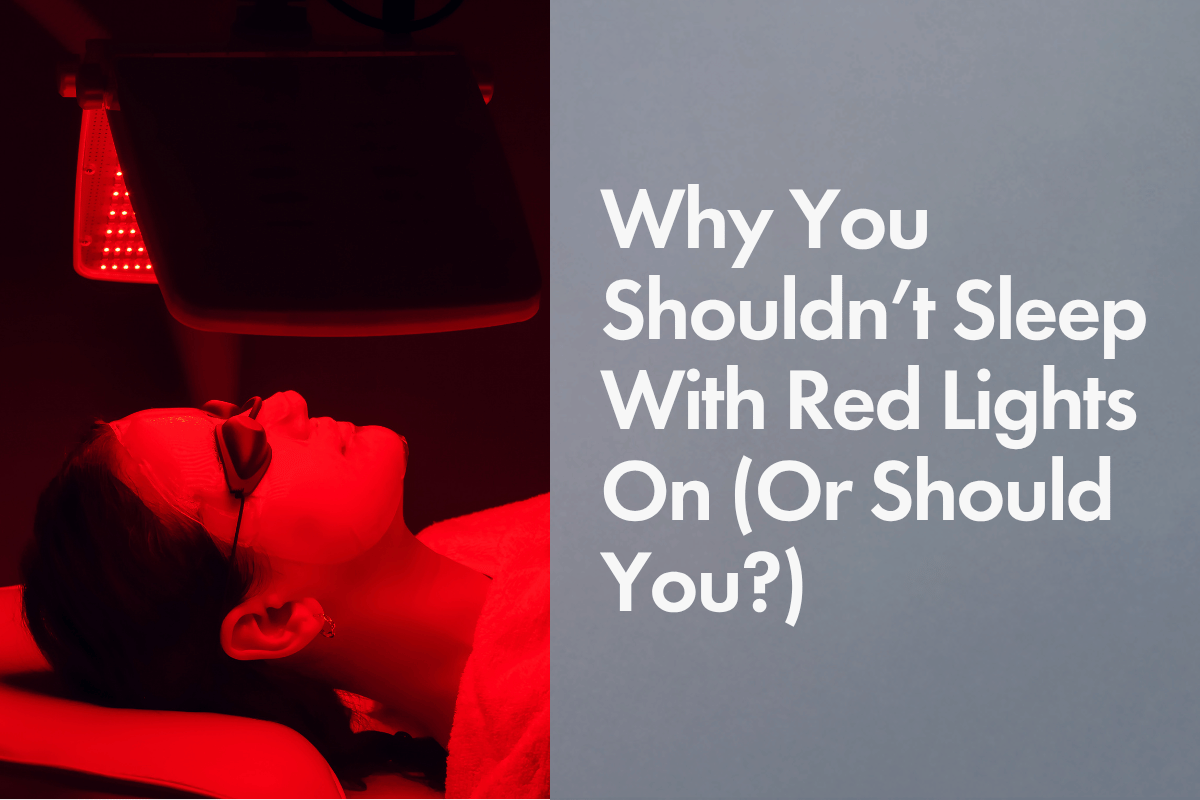
Use red or near‑infrared light therapy before bed, not during sleep. An evening session can be part of a relaxing wind‑down, then lights off for the night.
Your Evening Routine: A Simple, Science‑Friendly Playbook
2–3 Hours Before Bed
- Start dimming household lights.
- Enable night modes on devices or use screen filters.
- Skip high‑intensity workouts that spike alertness late at night.
1–2 Hours Before Bed
- Optional: run a short red or near‑infrared light therapy session.
- Keep lighting warm and low. Read, stretch lightly, or journal.
- Avoid heavy meals and late caffeine.
Bedroom Environment
- Keep it cool and dark. Blackout curtains help a lot.
- Hide or cover stray LEDs on chargers and devices.
- Put your phone face‑down or charge it outside the room.
If You Wake In The Night
- Use the lowest red path light. Keep it brief.
- Avoid checking the clock repeatedly or scrolling your phone.
Ready To Relax Your Skin & Your Senses?
Evening red light helps restore glow and support better rest.
Get Your LED Mask Today
Frequently Asked Questions
Does red light affect dreams or REM sleep?
Some studies suggest prolonged exposure to red light may subtly alter REM patterns or emotional tone during sleep, particularly in people with insomnia. For most, low-intensity red light has little noticeable effect on dreaming or restfulness.
Can red light exposure at night impact mood?
Yes, continuous night exposure has been linked with mild mood changes in sensitive individuals. It’s best used briefly before bed for relaxation rather than all night to avoid any potential emotional overstimulation.
Is it safe to use red light every night?
Yes, when used moderately and at low brightness. As with most sleep-related light exposure, timing and intensity matter more than color – short, dim evening sessions are safest and most effective.
Can red light therapy help with jet lag or shift work adjustment?
Potentially. Strategic use of red light at specific times may help fine-tune circadian timing without the harsh melatonin suppression of blue light, but results depend heavily on exposure schedule and duration.
Conclusion
So – why shouldn’t you sleep with red lights on? In short, even though red light is gentler on your body’s circadian rhythm than blue or white, total darkness still wins for deep, uninterrupted sleep.
Red light is best used before bed (about an hour or two beforehand) when it can help your body wind down, signal melatonin production, and even support cellular repair. Bright or prolonged light through the night, though, risks fragmenting sleep and dulling the restorative benefits your skin and body need.
If you’re looking for a calm, science-backed way to prepare for rest, our FDA-cleared 7-color LED face mask helps you unwind, support collagen renewal, and maintain healthy skin while protecting your natural sleep rhythm.
Shop the Lumi Visage LED Mask to make red light part of your evening ritual.