

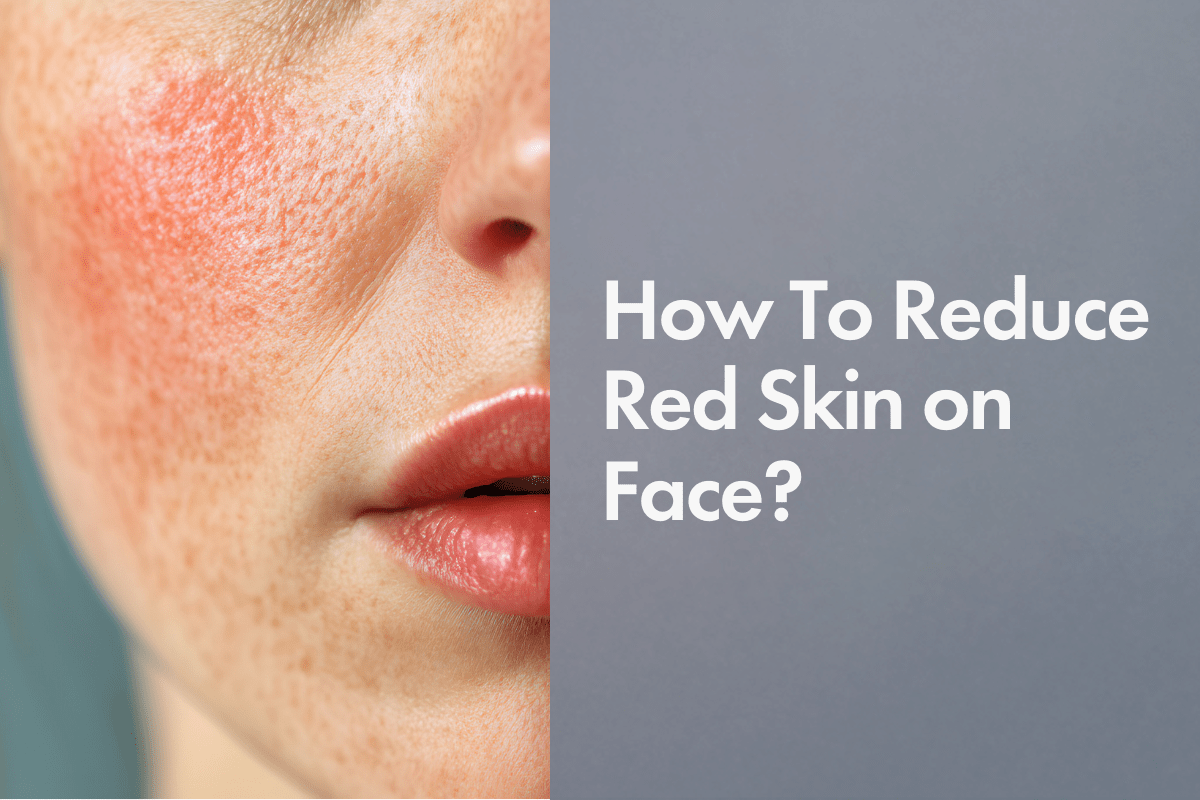

Facial redness can be confusing – it shows up for different reasons, lasts for different amounts of time, and sometimes feels impossible to calm.
Maybe it’s rosacea, maybe it’s irritation, or maybe it’s just too much sun.
Whatever the cause, it helps to understand what’s happening beneath the surface. We’ll break down how to reduce red skin on your face, covering causes, triggers, treatments, and practical steps that make a difference.
- Azelaic acid and niacinamide are top OTC ingredients for calming redness.
- Prescription treatments like metronidazole gel target specific conditions like rosacea effectively.
- LED light therapy (red, blue, yellow) reduces inflammation over 4-6 weeks.
- Laser treatments permanently reduce visible blood vessels and persistent redness.
What Causes Red Skin on the Face?
Redness is a skin response that can come from short-term triggers or longer-term conditions.
The most common causes include:
- Rosacea: A chronic inflammatory condition with persistent redness, flushing, visible vessels, and sometimes acne-like bumps. Linked to immune and vascular changes plus triggers like sun and stress.
- Eczema and dermatitis: Atopic or seborrheic dermatitis can cause red, dry, itchy, sometimes scaly patches on the face.
- Acne: Inflammation around hair follicles leads to red papules and pustules, often concentrated on the cheeks, chin, and nose.
- Irritation or allergy: Contact dermatitis triggered by fragranced products, essential oils, or environmental exposures.
- Sun damage: UV exposure causes inflammation, vasodilation, and barrier damage that show up as redness.
- Less common: Heat rash, folliculitis, medication reactions.
Over-the-Counter Treatments That Help Calm Redness
These ingredients work by reducing inflammation, strengthening the skin barrier, or protecting the skin from external stressors.
Introduce one at a time and give each 4 to 6 weeks.
- Azelaic acid: Anti-inflammatory and antibacterial. Helps acne and rosacea by calming inflamed skin and gently clearing pores. Often well tolerated.
- Niacinamide (vitamin B3): Boosts ceramide production and barrier strength, reduces blotchiness, and supports even tone.
- Aloe vera: Soothing, hydrating, and supportive of barrier repair. Useful after sun or when skin feels hot and irritated.
- Chamomile and calendula extracts: Plant-derived calming agents that can reduce swelling and visible redness.
- Green tea extract: Antioxidant and anti-inflammatory polyphenols help protect against pollution and calm irritation.
- Sulfur and zinc oxide: Sulfur helps with acne-related inflammation. Zinc oxide protects and soothes and is often used in mineral sunscreens.
- Barrier repair moisturisers: Look for ceramides, cholesterol, fatty acids, hyaluronic acid, and ectoin. Better barrier equals less reactivity.
- OTC anti-redness creams: Many combine soothing agents like allantoin and bisabolol with barrier support.
What To Expect:
Redness can start to look calmer within 2 to 4 weeks with daily use. For chronic conditions, steady improvements continue over 6 to 12 weeks.
If the skin stings or burns, stop and patch test before reintroducing.
Prescription Treatments for Persistent Redness
Always speak with a dermatologist for diagnosis and a tailored plan, especially if redness is persistent, painful, or worsening.
Rosacea Options
- Brimonidine gel and oxymetazoline cream: Constrict superficial vessels to reduce persistent erythema temporarily. Effects last several hours and need ongoing use.
- Azelaic acid 15 percent: Prescription-strength gels and foams calm inflammation and improve bumps and background redness.
- Metronidazole: Anti-inflammatory and antibacterial, helpful for mild to moderate inflammatory rosacea.
- Ivermectin: Targets Demodex mites and inflammation. Useful for moderate to severe papulopustular rosacea.
- Oral doxycycline: Sub-antimicrobial dosing reduces inflammatory lesions and redness.
- Oral isotretinoin: Reserved for severe, resistant cases under close supervision.
Eczema & Dermatitis Options
- Topical corticosteroids: Reduce inflammation during flares. Use the lowest effective strength for short periods on the face.
- Calcineurin inhibitors (tacrolimus, pimecrolimus): Nonsteroid immunomodulators suitable for sensitive areas and longer-term control.
- Emollients and barrier therapies: Prescription-strength ceramide-rich creams reduce flares by improving barrier integrity.
- Antihistamines or systemic therapy: For severe itch or refractory cases, dermatologists may consider dupilumab, cyclosporine, or other systemic agents.
LED Light Therapy for Redness
At home LED can be a helpful, non-invasive addition for redness-prone skin when used consistently.
- Red light 630 to 660 nm: Supports photobiomodulation at the mitochondrial level which increases ATP, encourages fibroblast activity, and supports collagen synthesis. The outcome is better barrier function and reduced inflammatory signalling, so skin looks calmer.
- Blue light around 415 nm: Targets acne-causing bacteria and helps reduce acne-related inflammation and redness.
- Yellow light around 590 nm: Calms the look of dilated surface vessels and supports overall skin comfort, which is useful for rosacea-prone or reactive skin.
What To Expect:
With regular use, many people see a calmer baseline within 4 to 6 weeks with continued gains over 8 to 12 weeks.
Think of LED as training your skin to be less reactive rather than a single session quick fix.
At Home vs In Clinic:
In clinic devices are more powerful and usually come in short treatment courses. At home devices rely on consistency, which is often easier to achieve since you can use them in your routine for 10 minutes a day.
Calm Redness, Strengthen Skin, See Results
Professional-grade LED therapy without the clinic costs.
SHOP NOW – GET $100 OFF
Dermatology Procedures That Reduce Redness
If you have visible vessels or stubborn background redness, energy-based treatments can help.
- Pulsed dye laser and KTP lasers: These target hemoglobin to collapse small dilated vessels. Great for telangiectasia and persistent redness.
- IPL (intense pulsed light): A broad-band light that targets both pigment and vessels, helpful for diffuse redness and rosacea flushing.
- Fractional lasers: Originally used for texture and acne scarring, they can also improve redness by remodelling collagen and supporting vascular health.
Treatment Course:
Usually 1 to 6 sessions spaced a few weeks apart.
Expect temporary swelling or redness after sessions, minimal downtime for IPL and non-ablative lasers, and maintenance treatments over time.
Skincare Ingredients and Practices to Avoid
- Denatured alcohol and harsh astringents: Dry out the barrier and increase reactivity.
- Fragrance and perfumes: Common irritants and allergens in redness prone skin.
- Strong AHAs and BHAs: High concentrations or frequent use can inflame sensitive skin. If you exfoliate, keep it very gentle and infrequent.
- Physical scrubs: Abrasive particles can create micro tears and more redness.
- Menthol, camphor, peppermint: Cooling on contact but often irritating underneath.
- Sodium lauryl sulfate (SLS): Strips natural lipids and worsens dryness.
- Hot water and rough towels: Choose lukewarm water and pat dry.
Building a Gentle Skincare Routine for Redness
Aim for simple, soothing, and consistent.
Morning
- Cleanser: Mild, fragrance-free, SLS-free. Lukewarm water only.
- Treatment: Niacinamide or azelaic acid if tolerated.
- Moisturizer: Ceramides, cholesterol, fatty acids, hyaluronic acid, or ectoin.
- Sunscreen: Broad-spectrum mineral SPF 30 or higher with zinc oxide and or titanium dioxide.
Evening
- Cleanser: Same gentle cleanser. Double cleanse if wearing long-wear SPF or makeup, but keep both steps mild.
- LED session: If using an at home device, this is a convenient moment. Follow device guidance, usually around 10 minutes.
- Treatment: Azelaic acid or a prescribed topical for rosacea or eczema. If irritation occurs, alternate nights.
- Moisturizer: Barrier first. Layer a simple soothing cream to seal hydration.
Exfoliation
Optional and only if skin is stable. Consider low strength lactic or mandelic acid no more than 1 to 2 times a week.
Stop if stinging or redness increases.
Patch Testing & Pacing
Introduce one new product every 2 weeks so you can spot what works and what irritates.
Lifestyle and Dietary Tips That Support Calmer Skin
- Sun protection every day: Mineral SPF, hats, shade, and avoid peak sun when possible. UV is a top trigger of flares.
- Anti inflammatory eating pattern: Think Mediterranean style meals with oily fish, colourful vegetables, legumes, nuts, olive oil, and whole grains.
- Probiotics and prebiotics: Yoghurt, kefir, sauerkraut, kimchi, miso, and fibre rich foods support a healthy gut skin axis.
- Helpful supplements: Omega-3s and zinc can be useful if intake is low. Speak to a healthcare professional if you are unsure.
- Know your personal triggers: Alcohol, especially red wine, spicy food, and foods high in cinnamaldehyde like cinnamon, tomatoes, citrus, and chocolate can be provocative for some. Keep a simple log to learn your pattern.
- Stress care: Manageable daily habits like a short walk, breathwork, or consistent sleep can reduce flushing episodes linked to stress.
Common Mistakes That Make Redness Worse
- Using too many actives at once: Acids, retinoids, and scrubs stacked together lead to barrier breakdown and more redness.
- Over-cleansing and hot water: Strips protective lipids and increases sensitivity.
- Skipping sunscreen: UV is a repeat offender for redness and visible vessels.
- Ignoring triggers: If every Friday night red wine equals a Saturday flare, the pattern is telling you something.
- Quitting too soon: Barrier repair and redness reduction take time. Most evidence based routines need 4 to 6 weeks for visible changes and longer for full results.
Frequently Asked Questions
Can dehydration make facial redness worse?
Yes. When skin is dehydrated, the barrier weakens and blood vessels show more prominently. Staying hydrated and using humectants like hyaluronic acid can help calm the look of redness.
Is facial redness more common in certain skin tones?
Rosacea is often underdiagnosed in deeper skin tones because redness is less obvious, but it affects all skin types. Symptoms may appear more as warmth, swelling, or dark patches instead of bright red flushing.
Does exercise make redness worse?
Exercise increases circulation and can temporarily worsen redness, especially for rosacea. Cooling down gradually, using a cold compress post-workout, or working out in cooler environments helps minimize flares.
Can hormones cause facial redness?
Yes. Hormonal changes, such as those during pregnancy, menopause, or with certain medications, can affect vascular responses and trigger more frequent flushing or redness.
Conclusion
Managing facial redness starts with understanding what’s behind it – whether it’s rosacea, eczema, acne, irritation, or sun damage – and building habits that keep your skin barrier strong.
The most effective approach is usually a mix of prevention, calming ingredients, and steady routines. Sometimes prescription treatments or professional procedures are needed, but small daily choices, like sunscreen and barrier support, make a big difference too.
If you’re looking for a simple way to support calmer, stronger skin at home, our FDA-cleared 7-color LED mask brings clinical wavelengths into your routine. It works to reduce inflammation, strengthen the barrier, and ease acne-related redness in just 10 minutes a day – giving you a consistent, professional-grade option without the clinic visits.