


Not all skin cancer treatments involve needles or scalpels.
Enter blue light therapy—a non-invasive, high-tech option that’s changing the game for conditions like actinic keratosis.
Curious if it’s the right fit for you? Let’s explore its perks, its quirks, and everything in between.
- Targets precancerous and superficial skin cancers with minimal scarring and downtime.
- Not suitable for deeper or aggressive skin cancers due to limited penetration.
- Temporary side effects include redness, swelling, and increased photosensitivity.
- Multiple sessions may be needed for optimal results, depending on the condition.
- Ideal for actinic keratosis and patients seeking non-invasive, cosmetic-friendly treatment options.
Pros of Blue Light Therapy for Cancer Treatment
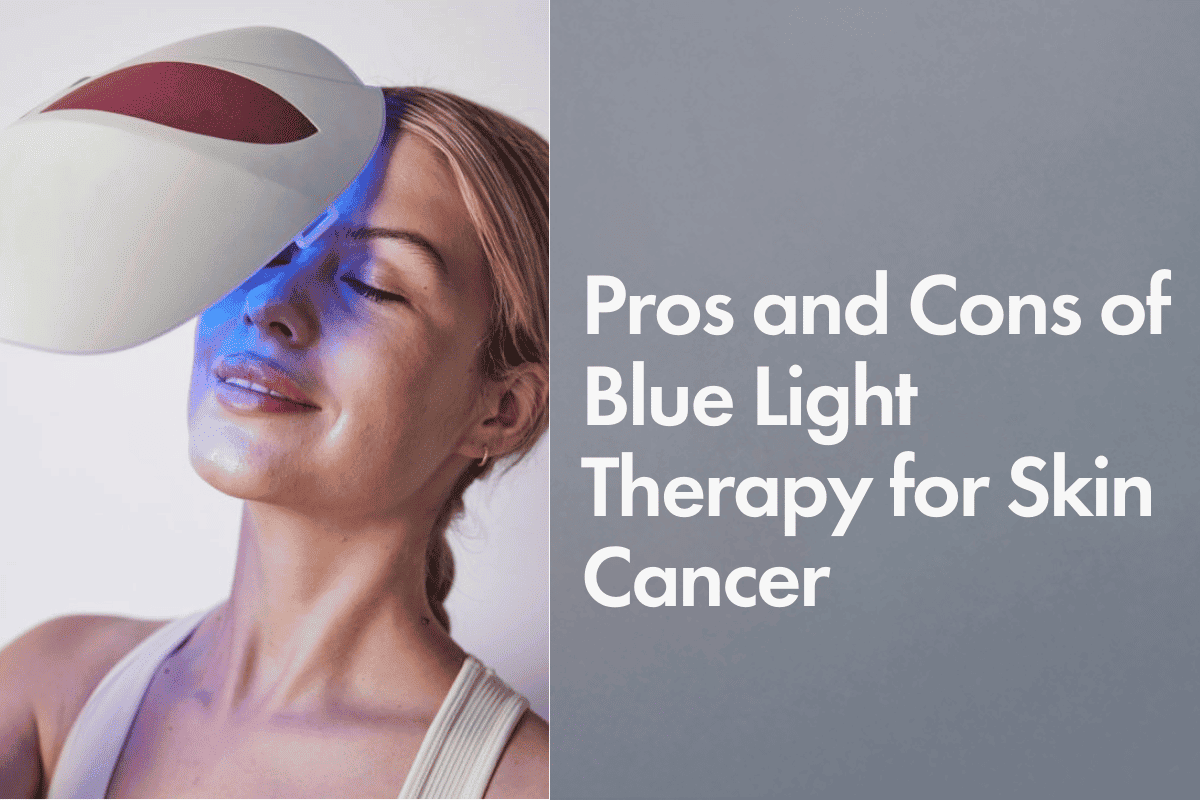
Blue light therapy, or photodynamic therapy, is a precise, non-invasive treatment for targeting abnormal skin cells.
A light-sensitive solution like ALA is applied to the skin, absorbed by abnormal cells, and then activated by a controlled blue light to destroy them.
This treatment is effective for actinic keratosis and some non-melanoma skin cancers, offering minimal scarring and downtime.
However, it’s not ideal for deeper or more aggressive cancers.
Blue light therapy offers several benefits that make it an appealing option for certain patients:
1. Non-Invasive Treatment
One of the most significant advantages of blue light therapy is its non-invasive nature.
Unlike surgical procedures, it doesn’t require cutting into the skin, which means less risk of infection and a faster recovery time.
2. Minimal Downtime
Patients undergoing blue light therapy can typically resume their normal activities within a day or two.
While there may be temporary redness or sensitivity, the recovery period is far shorter compared to more invasive treatments.
3. Effective for Surface Lesions
Blue light therapy is highly effective for precancerous skin conditions like actinic keratosis.
Studies have shown it successfully reduces abnormal cell growth, preventing these lesions from developing into full-blown cancer.
4. Reduced Scarring
For those concerned about cosmetic outcomes, blue light therapy is an excellent option.
It targets abnormal cells without damaging surrounding tissue, leading to minimal scarring or changes in skin texture.
5. Easy Accessibility
Blue light therapy is widely available in dermatology clinics and medical centers, making it an accessible choice for many patients.
Cons of Blue Light Therapy
Despite its benefits, blue light therapy has limitations that need to be considered:
1. Limited to Surface Lesions
Blue light therapy is most effective for superficial conditions.
It cannot penetrate deeply into the skin, which means it’s not suitable for invasive or metastatic skin cancers.
2. Potential Side Effects
Common side effects include redness, swelling, and a burning or stinging sensation during and after treatment.
While these symptoms are temporary, they can be uncomfortable for some patients.
3. Photosensitivity After Treatment
After a session, the treated area becomes highly sensitive to sunlight and certain indoor lighting.
Patients are often advised to avoid direct light exposure for 48 hours to prevent severe irritation or damage.
4. Multiple Sessions May Be Required
For some patients, one treatment session isn’t enough. Multiple sessions might be necessary to achieve the desired results, which can increase the overall cost and time commitment.
5. Not Suitable for All Patients
Blue light therapy isn’t recommended for individuals with certain medical conditions, such as porphyria or other photosensitivity disorders. It’s also less effective for darker skin tones due to lower light absorption.

Comparing Blue Light Therapy to Other Treatments
To fully understand the role of blue light therapy, it’s helpful to compare it to alternative treatments:
1. Surgical Options
- Pros: Surgical excision is effective for removing both superficial and deep skin cancers. It offers a definitive solution with high success rates.
- Cons: It’s invasive, requires stitches, and can leave noticeable scars. Recovery time is also longer.
2. Radiation Therapy
- Pros: Radiation is effective for advanced skin cancers that can’t be treated surgically.
- Cons: It can cause long-term side effects like skin thinning and pigmentation changes.
3. Topical Treatments
- Pros: Creams like fluorouracil are non-invasive and can be applied at home.
- Cons: They require consistent use over several weeks and may cause irritation or peeling.
Each treatment has its strengths and weaknesses, and the best option depends on the type and severity of the skin condition.
Comparison: Types of Treatments for Skin Cancer
| Criteria | Blue Light Therapy | Surgical Excision | Radiation Therapy | Topical Treatments |
|---|---|---|---|---|
| Non-Invasive | ✔️ | ❌ | ❌ | ✔️ |
| Quick Recovery Time | ✔️ | ❌ | ❌ | ✔️ |
| Effective for Surface Lesions | ✔️ | ✔️ | ❌ | ✔️ |
| Treats Deep or Aggressive Cancers | ❌ | ✔️ | ✔️ | ❌ |
| Minimal Scarring | ✔️ | ❌ | ✔️ | ✔️ |
| Multiple Sessions Required | ✔️ | ❌ | ✔️ | ✔️ |
| Photosensitivity Risks | ✔️ | ❌ | ❌ | ❌ |
| Widely Available | ✔️ | ✔️ | ✔️ | ✔️ |
Who Is an Ideal Candidate?
Blue light therapy is best suited for patients with:
- Actinic keratosis or other precancerous lesions.
- Non-melanoma skin cancers that are superficial and localized.
- A desire for a minimally invasive treatment with little scarring.
Blue light therapy is not recommended for individuals with deep or aggressive skin cancers, photosensitivity disorders, or certain medical conditions. A dermatologist can determine if blue light therapy is the right choice based on your unique circumstances.
Dealing With Skin Concerns Like Redness Or Sun Damage?
Our LED Mask brings blue light therapy right to your home
Shop Now – Get $100 Off
Frequently Asked Questions
Can blue light therapy be combined with other skin cancer treatments?
Yes, it’s sometimes used alongside surgical or topical treatments for a more comprehensive approach.
How long does a blue light therapy session take?
A session typically lasts 15–30 minutes, though preparation and recovery may take longer.
Is blue light therapy safe for darker skin tones?
While effective, it may be less visible on darker skin tones, requiring careful assessment by a dermatologist.
Can blue light therapy treat sun damage that isn’t precancerous?
Yes, it’s also used for improving sun-damaged skin, reducing pigmentation, and evening out texture.
What happens if I don’t avoid sunlight after treatment?
Sun exposure after treatment can cause severe burns or irritation due to heightened photosensitivity. Always follow post-care instructions.
Conclusion
Blue light therapy is a precise, non-invasive way to target abnormal skin cells, offering minimal downtime and reduced scarring.
It’s an excellent option for conditions like actinic keratosis and certain non-melanoma skin cancers, though it may not be suitable for deeper cases.
Ready to experience the benefits of blue light therapy at home? Try the 7-Color Lumi Visage LED Face Mask and take control of your skin’s health today.