


In as little as 10 minutes a day, an at-home LED light therapy face mask can do wonders for your skin—smoothing fine lines and wrinkles, minimizing acne, soothing redness and rosacea, healing scars and wounds, and treating a range of skin conditions.
If you’re considering adding an LED face mask to your skincare routine, you’ve come to the right place. In this post, we go over how to use your Lumivisage LED Face Mask to achieve optimal results and get the healthy, glowing skin you deserve.
Table of Contents
- How to Use an LED Face Mask
- Safety Precautions
- Frequently Asked Questions (FAQs)
- Tips for Maximizing the Benefits of Your LED Face Mask
- Rejuvenate Your Skin With Lumivisage
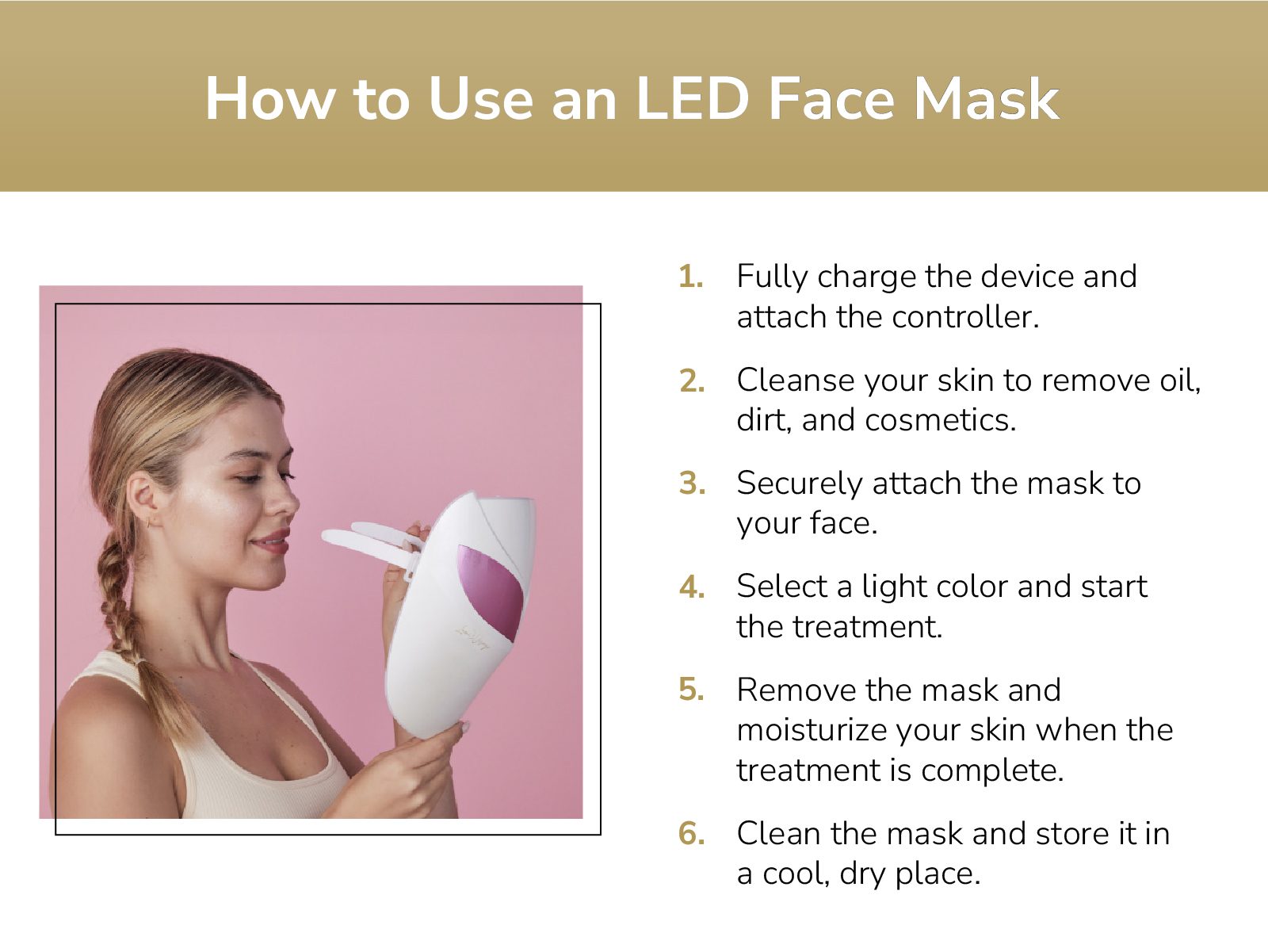
How to Use an LED Face Mask in 6 Easy Steps
The Lumivisage LED Face Mask is a light therapy device. Like other LED devices, it uses therapeutic wavelengths from light-emitting diodes to deliver a variety of skin benefits and is safe for all skin types. But our mask differs from other at-home devices because it’s built with you in mind.
Our mask is FDA-cleared, meaning it’s safe to use. Built-in eye protection keeps your eyes safe during LED treatment. And because each wavelength of light comes with its own unique benefits, our mask offers a spectrum of different wavelengths, including red light, blue light, and green light, to help you target a wide range of skin concerns. It’s also portable, so you can use it at home or take it with you when traveling.
Here’s how to use your home LED mask to get the most out of your treatment.
1. Charge the Device
Before you use your mask, make sure the device is fully charged.
Connect the charging cable to the controller and plug it into an outlet. When the battery is fully charged, the indicator light on the controller turns green.
The mask is fully cordless, meaning it doesn’t need to be plugged into an outlet to work. Connect the charged controller to the mask and you’re ready to go.
2. Cleanse Your Skin
Before you start an LED facial treatment, it’s important to wash your face.
Having clean skin helps the light penetrate more deeply. We recommend using a gentle facial cleanser to ensure you can remove any oil, dirt, sunscreen, makeup, or skincare products from your pores before you start treating. Make sure your skin is dry before you put the mask on.
There’s no need to apply any skincare products before you use LED therapy. Skincare is a great complement to your treatment, but, if anything, products should be applied after you’re done.
3. Attach the Mask
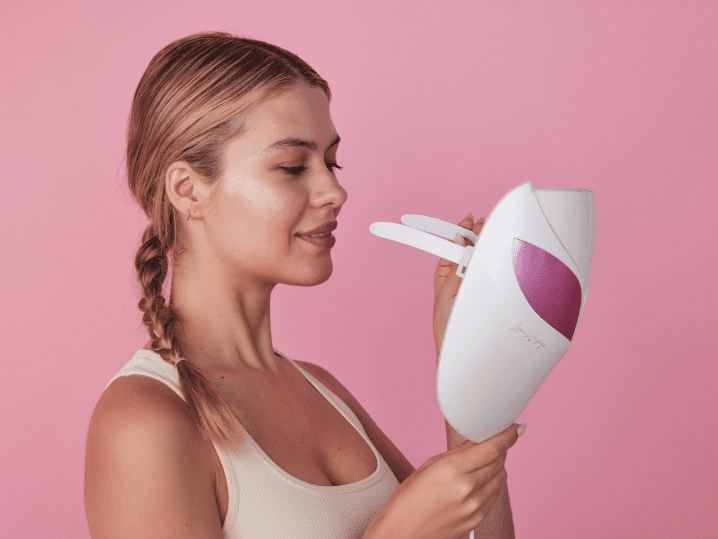
Next, find a comfortable place to sit and relax during your session. Make sure your LED mask is secured firmly to your face, close to your skin, but without being too tight or uncomfortable.
Also, make sure that the eye shield completely covers your eye. This protects your eyes from the light, ensuring they’ll be safe for the duration of your treatment.
4. Choose and Start Your Treatment
When you’re ready to start, press the M (mode) button to select the wavelength or color you want to use. You can choose from a range of different wavelengths. Here are examples of popular LED light therapy colors and their uses.
- Red: The most popular and deepest-penetrating wavelength, red light stimulates elastin, hyaluronic acid, and collagen production, which can reduce fine lines, wrinkles, and acne scars. It can also help to reduce inflammation, fight acne, and aid in wound healing.
- Amber: Can reduce wrinkles and reduce redness associated with inflamed capillaries.
- Blue: A great complement to red, blue light fights acne by killing acne-causing bacteria on the surface of your skin.
- Green: Green light promotes healing, stimulates blood vessel synthesis, and reduces inflammation.
- Yellow: Another great wavelength for pigment issues, yellow light reduces hyperpigmentation and targets redness and inflammation from sun damage and conditions like rosacea and can help wounds heal faster.
- Purple: The shortest wavelength on the visible light spectrum, purple light helps kill surface-level bacteria, minimizing acne lesions. It can also delay signs of aging.
Next, hold the power button for a second or two to begin the treatment. Then, sit back and relax! Enjoy a moment of self-care knowing our LED Face Mask is rejuvenating your skin.
The device uses voice guidance to let you know when treatment has begun, when there is six minutes left, three minutes left, and at the end of treatment. When the 10-minute session is complete, it automatically turns off. However, you can stop the treatment by removing the mask or pressing the power button at any time if you need to.
5. Remove the Mask and Moisturize Your Skin
Once your treatment is complete, carefully remove the mask and apply a gentle moisturizer or your favorite serum to your skin. We recommend using topical products with ingredients that complement the therapy, such as:
- Hyaluronic acid: It hydrates your skin, and can increase the firming effect of red light therapy when you apply it after the fact.
- Green tea : This stimulating ingredient may improve the effects of red light therapy, too.
Your skin may feel a little tight or dry after LED therapy. When you’re done treating, you can go about the rest of your skincare routine as normal.
6. Clean and Store the Mask
After using the mask, gently wipe the inside and outside of the mask with a damp cloth and a few drops of mild soap if needed. Pat it dry and leave it out to air dry fully. Once it’s dry, you can store it in a cool, dry place.
Cleaning the mask prevents the buildup of oil or residue, which could cause breakouts with repeated skin contact. It also improves the longevity and effectiveness of the device.
Safety Precautions
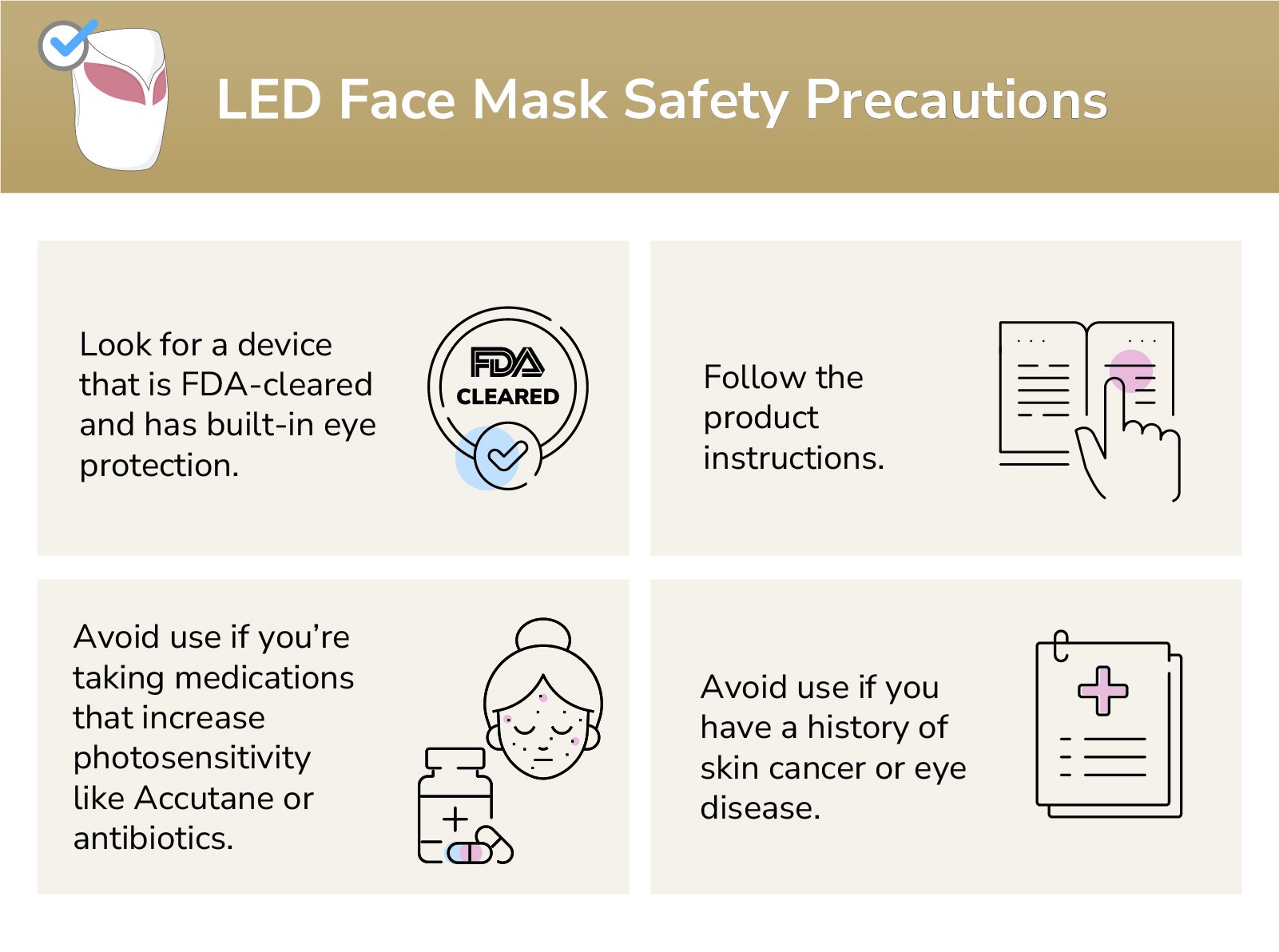
LED masks are generally safe to use for all skin types. One study showed post-treatment redness disappearing after one hour and post-treatment edema (swelling) resolved within 24 hours. Following the instructions outlined for your specific device is the best way to ensure you’re using it safely. Here are some other safety tips to keep in mind:
- Consult with your doctor. If you experience any irritation while using a light therapy device, stop using it right away and consult your doctor. If you’re currently undergoing treatment or if you have any questions about LED light therapy, talk to your doctor or dermatologist about using this treatment. You can even try it in your doctor’s office if you’re more comfortable doing it under medical supervision.
- Look for an FDA-cleared mask. FDA clearance means the device has gone through extensive testing and met the highest regulatory standards set by the U.S. Food and Drug Administration (FDA). All Lumivisage products are FDA-cleared.
- Don’t use an LED mask without eye protection. Depending on which wavelengths you choose to treat with, your LED mask emits a variety of lights, which can include UV and infrared light. Always use eye protection to ensure your eyes aren’t exposed to potential damage. The Lumivisage LED Face Mask has built-in eye protection to keep your eyes safe during treatment.
- Don’t use an LED mask if you’re taking certain medications. Medications like Accutane and antibiotics can make you photosensitive, meaning the treatment might damage your skin. This list of medications can help you see what types may make your skin more sensitive to light.
- Don’t use an LED mask if you have a history of certain medical conditions. Conditions like photosensitivity, photosensitive skin disease, skin cancer or eye disease increase the risk of injury, damage, and other negative side effects.
Frequently Asked Questions (FAQs)
If you have questions about LED face masks, we have answers!
How Often Should You Use Your LED Face Mask?
For the best results, follow your manufacturer’s instructions when using your LED face mask. You can use the Lumivisage Face Mask two to three times per week in 10 to 15 minute sessions. Wait at least two days between each session.
How Long Does it Take to See Results?
How long it takes to see results depends on multiple factors including your skin condition and area of treatment. One study showed signs of skin rejuvenation after red light therapy twice a week for four weeks.
Another clinical-strength study on blue light found that individuals started to show improvement of inflammatory lesions at one week, a reduction in flares at two weeks, and a reduction in non-inflammatory lesions at four weeks. At the end of eight weeks, 90 percent of subjects reported improvements in their skin’s overall appearance, clarity, radiance, tone, texture and smoothness.
It typically takes at least one month of regular use to see results, though some see improvement sooner.
To achieve the best results, use your LED light therapy mask consistently as part of your regular skincare routine.
Should Your Eyes Be Open or Closed During Red Light Therapy?
Keep your eyes closed—you should never have your eyes open during red light therapy. It’s even better to wear eye protection during your treatment. Some devices, like the Lumivisage LED Face Mask, come with built-in eye protection for your safety and convenience.
How Should You Prepare Your Face for Red Light Therapy?
You don’t need to do anything special to prepare your skin for red light therapy. Just wash your face to remove any dirt, oil, or beauty products. The light can penetrate clean skin more deeply.
Can You Do Red Light Therapy After Microneedling?
Yes, you can do red light therapy after microneedling. In fact, a clinical study that coupled microneedling and red light therapy found that patients showed an improvement in photoaging.
Red light therapy can be done in tandem with many cosmetic treatments to help improve your results and also to reduce recovery time. Red LED light is especially helpful to use after microneedling because it boosts collagen production and helps your skin heal faster.
Can You Use Red Light Therapy With Retinol?
Yes, you can use retinol with red light therapy. Your skin should be clean while you’re using an LED device, but applying retinol after your treatment can improve your results, since it also works to unclog pores and increase skin cell turnover. One study even found using retinol, also known as Vitamin A, in conjunction with light therapy improved wound healing.
Tips for Maximizing the Benefits of Your LED Face Mask
Here’s how to get the most out of your light therapy treatment.

1. Be Consistent
Consistency is key to getting the best results. Make using your LED mask a part of your regular skin-care or beauty routine, as regular as cleansing or putting on sunscreen.
2. Choose a Comfortable Environment
Using your LED face mask is a relaxing and rejuvenating experience, so setting yourself up in a comfortable environment will help you fully unwind. You can play your favorite tunes, lay down, and do whatever makes you the comfiest.
Remember, your device is cordless, so you can use it wherever you want to give your skin a boost. However, you shouldn’t use the mask while driving or walking, or in any other situation that could cause a hazard.
3. Select the Best Color LED Light for Your Issue
Our LED Face Mask is equipped with seven LED light therapy colors, each with their own unique skin benefits. You can choose the light color that will give you targeted support for the issues you want to treat.
Rejuvenate Your Skin With Lumivisage
Whether you’re struggling with a stubborn skin concern or looking for a way to add a little bit of luxury to your life, our LED Face Mask can give you the quality self-care you deserve without breaking the bank. In as little as 10 minutes a day, you’ll be on your way to achieving skin that’s as beautiful as you are.
References
Journal of American Academy of Dermatology. “Low-level red and infrared light increases expression of collagen, elastin, and hyaluronic acid in skin.” https://www.jaad.org/article/S0190-9622%2819%2933160-3/fulltext. Date accessed: October 3, 2023.
Lasers in Surgery and Medicine. “Low-level red LED light inhibits hyperkeratinization and inflammation induced by unsaturated fatty acid in an in vitro model mimicking acne.” https://pubmed.ncbi.nlm.nih.gov/29095531/. Date accessed: October 3, 2023.
Indian Dermatology Online Journal. “Light-based therapies in acne treatment.” https://www.ncbi.nlm.nih.gov/pmc/articles/PMC4439741/. Date accessed: October 3, 2023.
Anais Brasileiros De Dermatologia. “Effects of low-power light therapy on wound healing: LASER x LED.” https://www.ncbi.nlm.nih.gov/pmc/articles/PMC4148276/. Date accessed: October 3, 2023.
Photobiomodulation, Photomedicine, and Laser Surgery. “Photobiomodulation Reduces Periocular Wrinkle Volume by 30%: A Randomized Controlled Trial.” https://pubmed.ncbi.nlm.nih.gov/36780572/. Date accessed: October 5, 2023.
Dermatologic Surgery. “Improvement of post fractional laser erythema with light-emitting diode photomodulation.” https://pubmed.ncbi.nlm.nih.gov/19397672/. Date accessed: October 5, 2023.
FEMS Immunology & Medical Microbiology. “Eradication of Propionibacterium acnes by its endogenic porphyrins after illumination with high intensity blue light.” https://academic.oup.com/femspd/article/35/1/17/528711. Date accessed: October 3, 2023.
Journal of Dermatological Science. “Light-emitting diode 585nm photomodulation inhibiting melanin synthesis and inducing autophagy in human melanocytes.” https://pubmed.ncbi.nlm.nih.gov/29065997/. Date accessed: October 3, 2023.
The Journal of Clinical and Aesthetic Dermatology. “Light-emitting Diodes.” https://www.ncbi.nlm.nih.gov/pmc/articles/PMC4479368/. Date accessed: October 3, 2023.
Journal of the American Academy of Dermatology. “The efficacy of violet light in the treatment of acne.” https://www.jaad.org/article/S0190-9622(03)03395-4/fulltext. Date accessed: October 3, 2023.
Wisconsin Department of Health Services. “Medications and other Agents that Increase Sensitivity to Light.” https://www.dhs.wisconsin.gov/radiation/medications.htm. Date accessed: October 3, 2023.