

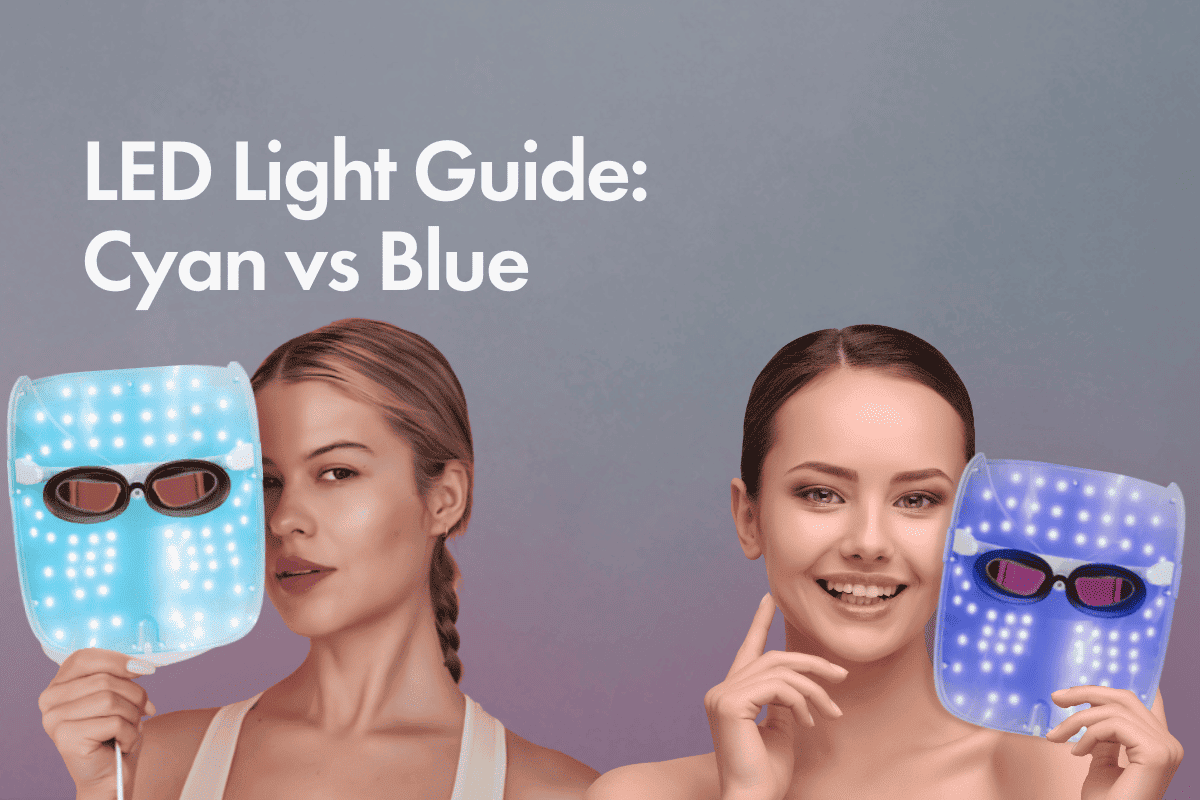

Blue gets all the credit for fighting acne, but cyan? That’s the underdog you should know about.
While blue light tackles breakouts, cyan steps in to calm redness, boost circulation, and speed up healing.
If your skin is acting up—whether it’s inflamed, irritated, or just uneven—choosing the right light makes all the difference.
Let’s get into what each one does and how to get the most out of LED therapy.
- Blue light fights acne by killing bacteria and reducing oil production.
- Cyan LED light therapy benefits include calming redness, improving circulation, and fading pigmentation.
- Blue light works on the skin’s surface, while cyan penetrates deeper for broader healing effects.
- Both lights are safe, but eye protection and gradual use help prevent sensitivity.
The Science Behind Blue and Cyan Light
LED therapy uses targeted light to activate natural skin processes—no damage, just results.
Unlike UV rays, which harm cells, these wavelengths work safely to tackle concerns like acne, aging, and inflammation.
Blue and cyan light operate at the shorter end of the spectrum, focusing on surface-level issues.
The difference? Blue fights bacteria and oil, while cyan goes deeper to calm redness and boost circulation.
Blue Light (Around 470 nm)
Blue light sits on the lower end of the visible spectrum, making it one of the most widely used LED treatments.
It primarily affects the outermost layers of the skin, where bacteria and excess oil accumulate.
- Kills Acne-Causing Bacteria: Blue light produces oxygen radicals that destroy Propionibacterium acnes, the bacteria responsible for breakouts.
- Regulates Oil Production: It helps reduce excessive oiliness, making it beneficial for those with acne-prone skin.
- Improves Skin Texture: By reducing breakouts and excess oil, skin appears smoother and more refined over time.
Cyan Light (Approximately 500 nm)
Cyan light falls between blue and green on the spectrum.
It penetrates slightly deeper than blue light and has a broader range of benefits, especially for people dealing with inflammation and pigmentation issues.
- Calms Redness and Irritation: Cyan LED light therapy benefits those with rosacea, post-inflammatory redness, and general skin sensitivity.
- Supports Circulation: Increased blood flow helps deliver oxygen and nutrients to the skin, improving healing.
- Reduces Hyperpigmentation: Cyan light can help fade dark spots and discoloration over time.
Benefits of Blue LED Light Therapy

Acne Treatment
Blue light’s primary function is fighting acne. By targeting bacteria deep within pores, it reduces breakouts without the need for harsh topical treatments.
It’s especially effective for mild to moderate acne but may need to be paired with other treatments for severe cases.
Regulating Oil Production
People with oily skin often struggle with clogged pores and frequent breakouts. Blue light helps regulate oil levels, leading to fewer breakouts and a more balanced complexion.
Preventing Future Breakouts
Consistent use of blue LED therapy can help keep acne at bay by maintaining a cleaner skin environment.
Many dermatologists recommend it as part of a long-term acne management plan.
Supporting Wound Healing
Some research suggests blue light may speed up the healing of minor wounds and prevent post-acne scarring by reducing bacteria and inflammation at the skin’s surface.
Benefits of Cyan LED Light Therapy
Reducing Redness and Inflammation
Cyan LED light therapy benefits those with inflamed or sensitive skin. It works by soothing irritation and calming redness caused by acne, rosacea, or other skin conditions.
Improving Circulation
Good blood flow is essential for healthy skin.
Cyan light helps improve circulation, which means more oxygen and nutrients reach skin cells, speeding up healing and improving overall skin tone.
Fading Pigmentation
Cyan light may also play a role in reducing hyperpigmentation. It helps break down excess melanin, making dark spots and uneven skin tone less noticeable over time.
Post-Treatment Recovery
Many people use cyan light after chemical peels, laser treatments, or microneedling to reduce redness and support the skin’s healing process.
Comparing Cyan and Blue Light Therapies
Penetration Depth
- Blue light stays closer to the surface, making it ideal for acne and oil control.
- Cyan light reaches slightly deeper, helping with inflammation and pigmentation.
Primary Uses
- Blue light is best for killing bacteria and controlling oil production.
- Cyan light is better for soothing sensitive skin and improving circulation.
Who Should Use Which?
- If you struggle with breakouts and oily skin, blue light is the better choice.
- If you deal with redness, irritation, or pigmentation, cyan light may be more effective.
- Many devices offer both wavelengths, allowing for a customized skincare approach.
| Feature | Blue LED Light (470nm) | Cyan LED Light (500nm) |
|---|---|---|
| Best For | Acne, oil control | Redness, circulation, healing |
| How It Works | Kills acne bacteria, regulates oil | Calms irritation, boosts blood flow |
| Depth of Action | Surface level | Slightly deeper |
| Who Should Use It? | Oily, acne-prone skin | Sensitive, red, or irritated skin |
Safety Considerations
Eye Protection
Both blue and cyan light are bright and may cause eye strain with prolonged exposure.
Some at-home devices come with built-in eye protection, but if yours doesn’t, wearing goggles is a good idea.
Skin Sensitivity
Most people tolerate LED therapy well, but those with very sensitive skin should start with short sessions to see how their skin reacts.
If irritation occurs, reducing session time or frequency may help.
Consulting a Dermatologist
While LED therapy is generally safe, it’s always a good idea to check with a dermatologist if you have pre-existing skin conditions or are using prescription treatments.
Incorporating LED Light Therapy into Your Routine
Choosing the Right Device
When selecting an LED device, look for one that offers multiple wavelengths so you can switch between blue and cyan depending on your skin’s needs.
How Often Should You Use It?
- For acne-prone skin: 10–15 minutes of blue light therapy, 3–5 times per week.
- For redness and sensitivity: 10–15 minutes of cyan light therapy, 3–5 times per week.
- For combination concerns: Alternate between blue and cyan light based on how your skin feels.
Pairing With Skincare
- Before treatment: Start with a clean, dry face.
- After treatment: Apply a soothing moisturizer and SPF during the day.
- What to avoid: Harsh exfoliants or active ingredients like retinol immediately before or after LED therapy.
Breakouts Won’t Budge? Redness Won’t Quit?
Blue and cyan light therapy can fix that

Frequently Asked Questions
Can cyan and blue LED light be used together in the same session?
Yes, many devices alternate between both to target acne, redness, and inflammation in one treatment.
Does cyan LED light therapy help with under-eye circles?
It may improve circulation, which can slightly reduce dark circles caused by poor blood flow.
Can LED light therapy be used on other areas besides the face?
Absolutely! It’s often used on the chest, back (for acne), and even the scalp for hair health.
How long does it take for cyan light therapy to reduce redness?
Some people see results in days, but consistent use over weeks brings the best improvement.
Does blue or cyan light therapy help with scars?
Blue light prevents acne scars by reducing breakouts, while cyan supports healing and skin renewal.
Are there any skincare ingredients I should avoid when using LED therapy?
Strong exfoliants like retinol and AHAs can increase sensitivity—use them on non-LED days.
Conclusion
Blue and cyan LED light each play a unique role in skincare. Blue is the go-to for fighting acne, reducing oil, and keeping breakouts under control. Cyan steps in to calm redness, boost circulation, and support healing.
Choosing the right one depends on your skin’s needs, but combining both can deliver even better results.
Want an easy way to get both benefits at home? The Our 7-Color LED Face Mask gives you professional-grade light therapy in one device. Customize your treatments, target multiple concerns, and start seeing real improvements in your skin. Get yours today!