


Spent a lot on red light therapy but not seeing the results?
The key could be as simple as adjusting your timing.
Whether you’re targeting wrinkles, recovery, or energy, when you use your device can make all the difference.
Let’s break it down.
Key Notes
- Morning RLT sessions can boost energy and support natural circadian rhythms.
- Evening sessions aid muscle recovery but avoid them right before bed.
- Using RLT before or after exercise changes how your body responds.
- Consistency matters more than timing—regular use ensures the best results.
Morning or Evening: Does It Really Matter?
There’s no “one size fits all” answer to when you should use red light therapy. But let’s explore the benefits of different times so you can find what works best for you.
Morning: Your Cellular Wake-Up Call
You know how glorious that first cup of coffee feels in the morning? Well, red light therapy can have a similar effect on your cells.
When you use RLT in the morning, it kickstarts your mitochondria and sets you up for a more energetic day. Studies suggest that morning sessions can boost ATP production, leading to improved mental clarity and physical performance later in the day.
Here’s another interesting fact: using red light therapy in the morning mimics the effects of natural sunlight. This can help regulate your circadian rhythm, making it easier to wake up feeling refreshed.
So if you’re someone who needs more than a loud alarm to feel human in the morning, adding a quick RLT session might just be the missing piece in your routine.
Evening: Recharge and Recover
If you’re a get up and get out the door kind of person in the morning, no worries—RLT works wonders in the evening, too.
If you’re looking to soothe sore muscles after a tough workout or wind down after a long day, red light therapy can help your body recover more effectively. Evening sessions work particularly well for muscle recovery, reducing inflammation, and promoting overall repair as your body gears up for rest.
One thing to keep in mind: if you’re using RLT at night, try to avoid using it right before bed. Bright red light can be a bit too stimulating for some people and might interfere with melatonin production, making it harder to fall asleep.
Stick to sessions about two hours before bedtime for the best results.
Anytime: Consistency is Key
Morning or night, the bottom line is: consistency is far more important than the exact time you use red light therapy.
Whether you’re a morning person or a night owl, what truly matters is that you stick to a regular schedule.
The benefits of RLT build up over time, so the most effective approach is to find a time that fits into your life—whether that’s during your lunch break or in between Netflix episodes.
Not Seeing the Results You Expected from RLT?
We’ll help you maximize its benefits with the right mask.

Should You Use Red Light Therapy Before or After Exercise?
For those of you using red light therapy to enhance athletic performance or muscle recovery, the timing of your session can make a difference.
- Before Exercise: Using red light therapy before a workout primes your muscles for action. By boosting circulation and stimulating ATP production, you can enhance endurance and strength, potentially leading to better workout results.
- After Exercise: On the flip side, using red light therapy post-workout helps soothe sore muscles, reduce inflammation, and accelerate recovery. If you’re someone who pushes hard at the gym or on the trails, RLT can help you bounce back quicker, allowing you to train more consistently without feeling worn down.
How Often Should You Use Red Light Therapy?
Consistency, as always, is the secret to success.
Most experts recommend using red light therapy 3-5 times a week for 10-20 minutes per session. But if you’re targeting something specific like chronic pain or severe inflammation, you might benefit from daily sessions.
As with anything, start slow.
If you’re new to red light therapy, shorter sessions of 5-10 minutes are a great way to ease into it. Over time, you can gradually increase the duration as your skin and body get used to the treatment.
Once you’ve achieved your desired results—whether that’s smoother skin or quicker muscle recovery—you can cut back to a maintenance schedule of 2-3 times a week.
Maximizing Your Red Light Therapy Sessions
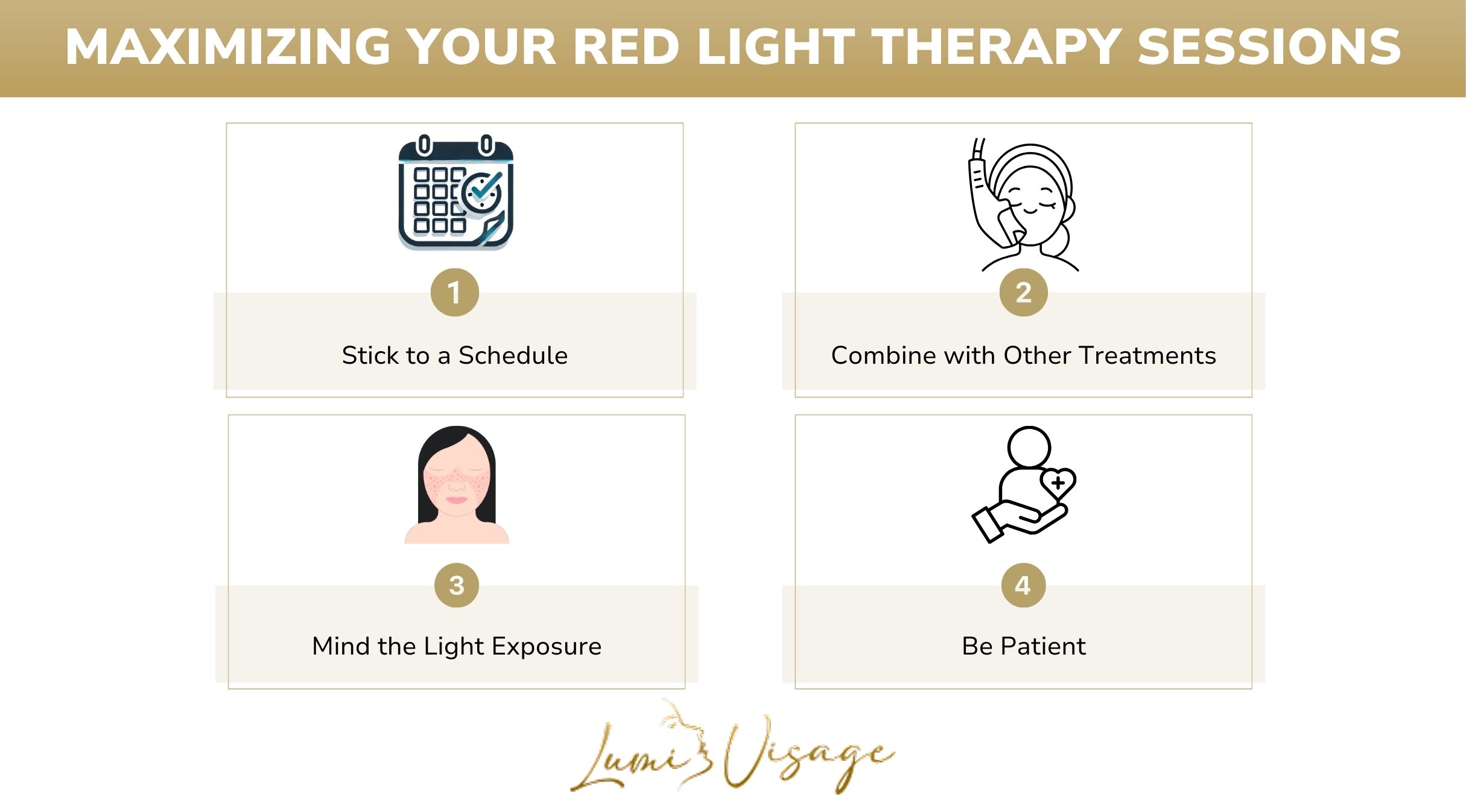
1. Stick to a Schedule
As we’ve mentioned, consistency is everything. Make RLT a regular part of your routine to see the best results. Try setting a specific time each day so it becomes a habit, like brushing your teeth or doing a quick stretch.
2. Combine with Other Treatments
For skin health, consider pairing red light therapy with other treatments, like serums or moisturizers that promote collagen production.
Just make sure to cleanse your face beforehand, as products like sunscreen can block the light from penetrating the skin.
3. Mind the Light Exposure
If you’re using red light therapy in the evening, avoid bright light exposure close to bedtime.
A good rule of thumb is to finish your session at least two hours before you hit the pillow to avoid disrupting your sleep.
4. Be Patient
I know, we all want instant results.
But like most things worth having, red light therapy takes time. The effects are cumulative, so be patient and give your skin and body the time they need to respond to the treatment.
Frequently Asked Questions
Can red light therapy cause any side effects?
While red light therapy is generally considered safe, overuse or improper exposure can cause mild side effects like temporary redness or tightness. It’s important to follow device guidelines to avoid overstimulation.
Does red light therapy impact energy levels during the day?
Yes! Morning sessions can boost energy and alertness, making it a great natural pick-me-up, especially for those feeling sluggish.
Is red light therapy safe for sensitive skin or conditions like rosacea?
Red light therapy is typically safe for sensitive skin, but if you have conditions like rosacea, consult a dermatologist first to ensure it won’t trigger irritation.
Can red light therapy help with joint pain or arthritis?
Yes, it’s been shown to reduce inflammation and provide relief for joint pain, including conditions like arthritis, due to its ability to penetrate deep tissues.
Conclusion
Timing your red light therapy sessions can make a huge difference in your results, whether you’re targeting skin, muscle recovery, or energy levels.
Morning sessions can help jumpstart your day, while evening use promotes recovery, but ultimately, consistency is the key to maximizing its benefits.
By integrating it into your routine in a way that fits your lifestyle, you’ll unlock the full potential of this powerful therapy.
Ready to experience the benefits of red light therapy firsthand? Shop our 7-Color LED Face Mask and start seeing real results.