


Fibromyalgia isn’t just pain—it’s exhaustion, brain fog, and feeling like your body is working against you.
Green light therapy for fibromyalgia is getting attention for its potential to ease pain and improve sleep.
Let’s look at whether it’s just hype or something worth trying.
- Fibromyalgia causes chronic pain, fatigue, and sensitivity with limited effective treatment options.
- Green light therapy may reduce pain by altering how the brain processes pain signals.
- Studies suggest it can improve sleep and lower pain sensitivity with regular use.
- Daily sessions of 30–60 minutes may provide the best results over time.
Is Green Light Therapy Worth Trying for Fibromyalgia?
Green light therapy for fibromyalgia has shown promising results for pain relief and sleep improvement, definitely making it worth considering.
If you’re managing fibromyalgia, adding green light therapy to your routine could be worth considering. It’s non-invasive, drug-free, and generally safe for most people.
Who Might Benefit?
- Those looking for an alternative or supplement to traditional pain treatments
- People who struggle with medication side effects and want a non-drug option
- Anyone with light sensitivity issues who can’t tolerate other types of light therapy
Who Should Be Cautious?
- People with epilepsy or light sensitivity disorders should consult a doctor first.
- If you’re on medications that increase sensitivity to light, discuss green light therapy with your healthcare provider.
For many, it may not replace other treatments, but it could provide additional relief with consistent use.
Understanding Fibromyalgia
Fibromyalgia is a chronic pain condition that affects the nervous system.
Unlike arthritis or joint disorders, it isn’t caused by inflammation or damage to tissues. Instead, it’s believed to be related to how the brain and spinal cord process pain signals.
Common Symptoms
- Widespread pain, often described as aching, burning, or throbbing
- Extreme sensitivity to touch and pressure
- Chronic fatigue and unrefreshing sleep
- Brain fog (difficulty concentrating and remembering things)
- Headaches and migraines
- Stiffness, especially in the morning
- Irritable bowel syndrome (IBS) symptoms
Current Treatment Options
There’s no single cure for fibromyalgia. Most treatment plans focus on managing symptoms with:
- Medications (pain relievers, antidepressants, muscle relaxants)
- Physical therapy and gentle exercise
- Cognitive behavioral therapy (CBT) for stress and pain management
- Lifestyle changes like improving sleep and reducing stress
How Green Light Therapy Works
Green light therapy involves exposure to light in the 520–550 nm wavelength range.
Unlike red or blue light, which are used for skin healing and acne treatment, green light is being studied for its effects on pain perception and nervous system regulation.
Here’s how it works:
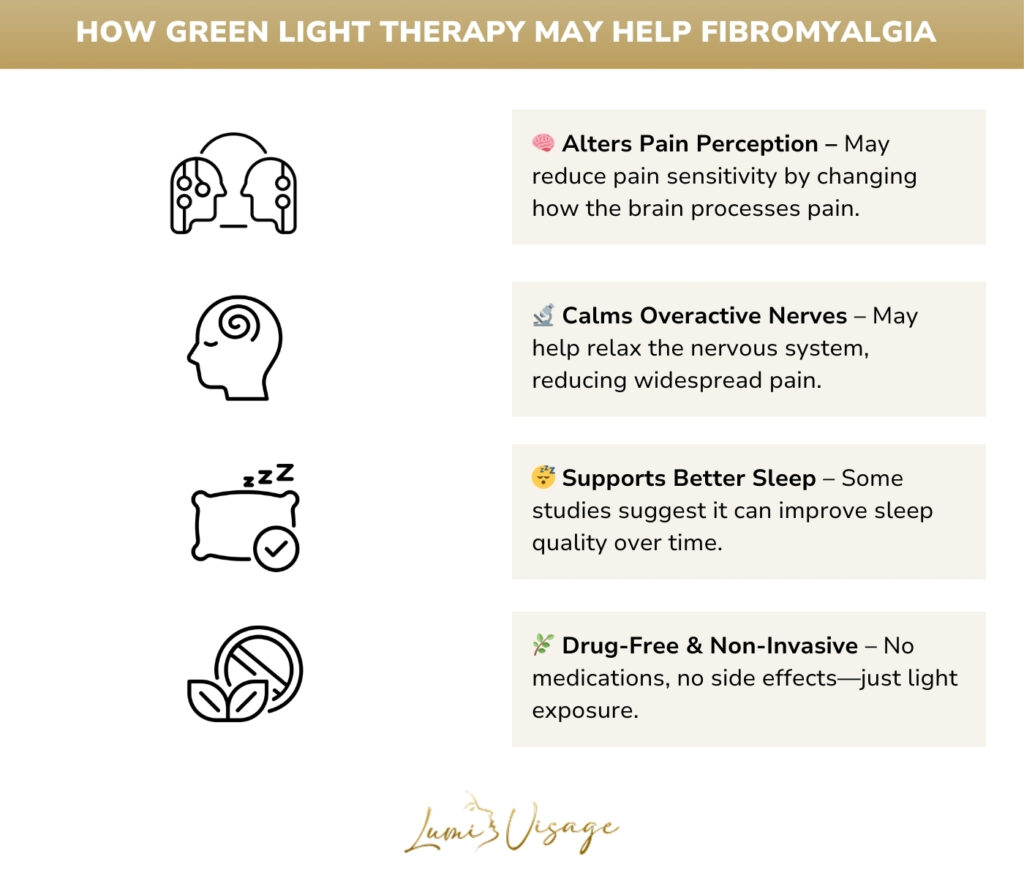
- Affects Pain Processing in the Brain: Research suggests that green light may help adjust how the brain perceives pain, potentially reducing sensitivity.
- Reduces Nerve Excitability: Some studies indicate that green light can calm overactive nerve pathways, which may be beneficial for fibromyalgia sufferers.
- Encourages Relaxation: Unlike harsh white or blue light, green light is often described as soothing, which might contribute to its effects on pain and sleep.
Unlike medication, which can have side effects or require long-term use, green light therapy is non-invasive and doesn’t involve chemicals.
How to Use Green Light Therapy for Fibromyalgia
If you’re considering trying green light therapy for fibromyalgia, consistency is key. While it isn’t a quick fix, regular sessions may help reduce symptoms over time.
1. Choose the Right Device
There are different types of green light therapy devices available:
- LED Light Panels – Used for full-body exposure, great for widespread pain.
- Green Light Bulbs – Can be placed in a lamp for ambient exposure.
- Wearable Devices – Glasses or masks that emit green light directly to the eyes.
2. Recommended Duration and Frequency
- Start with 30–60 minutes per day
- Use consistently for at least 4–6 weeks to gauge effectiveness
- Dim the room to avoid interference from other light sources
3. Best Practices for Optimal Results
- Use in the evening – Many users report that green light therapy improves relaxation and sleep.
- Avoid other bright lights during sessions – This prevents mixed light exposure from reducing the effects.
- Stay patient – Like other therapies, results take time to develop.
Expert Opinions on Green Light Therapy
While green light therapy is still being studied, some medical professionals are optimistic about its potential.
What Pain Specialists Say
- Many agree that light exposure can influence how the nervous system processes pain, making it an area worth researching further.
- Some recommend combining green light therapy with other fibromyalgia treatments for a more comprehensive approach.
Future Research and Applications
- Scientists are looking into whether green light therapy can help with other chronic pain conditions like neuropathy, arthritis, and migraines.
- Hospitals and clinics are testing green light therapy in pain management programs to see how it compares to traditional treatments.
While it’s not yet a mainstream treatment, growing interest in light therapy suggests it may play a bigger role in pain relief in the future.
Experiencing Fibromyalgia Pain That Won’t Let Up?
Green light therapy could bring the relief you need

Frequently Asked Questions
Can green light therapy help with fibromyalgia-related headaches?
Yes, some research suggests green light may reduce the frequency and intensity of migraines, which are common in fibromyalgia patients.
Does green light therapy improve mood or mental clarity?
Some users report feeling calmer and more focused after sessions, possibly due to its effects on the nervous system.
Can I use green light therapy while taking fibromyalgia medication?
Yes, it’s generally safe, but consult your doctor to ensure it won’t interfere with your treatment.
Is there a best time of day to use green light therapy?
Many people use it in the evening since it may promote relaxation and better sleep.
Can green light therapy help with fibromyalgia-related muscle stiffness?
Some users say it helps them feel less tense, but more studies are needed to confirm this effect.
Does green light therapy need to be combined with other treatments to work?
It can be used alone, but it may work best alongside other fibromyalgia treatments like exercise and stress management.
Conclusion
Fibromyalgia is tough to manage, and most treatments only do so much. Green light therapy is gaining attention for its ability to ease pain and improve sleep—without medication.
Early research and patient experiences suggest it could be a helpful tool, especially when used consistently. While it won’t cure fibromyalgia, it may offer relief where other treatments fall short.
If you’re looking for a simple, drug-free way to support your pain management routine, our 7-Color LED Face Mask includes a dedicated green light setting.
Try it today and see if green light therapy makes a difference for you.