

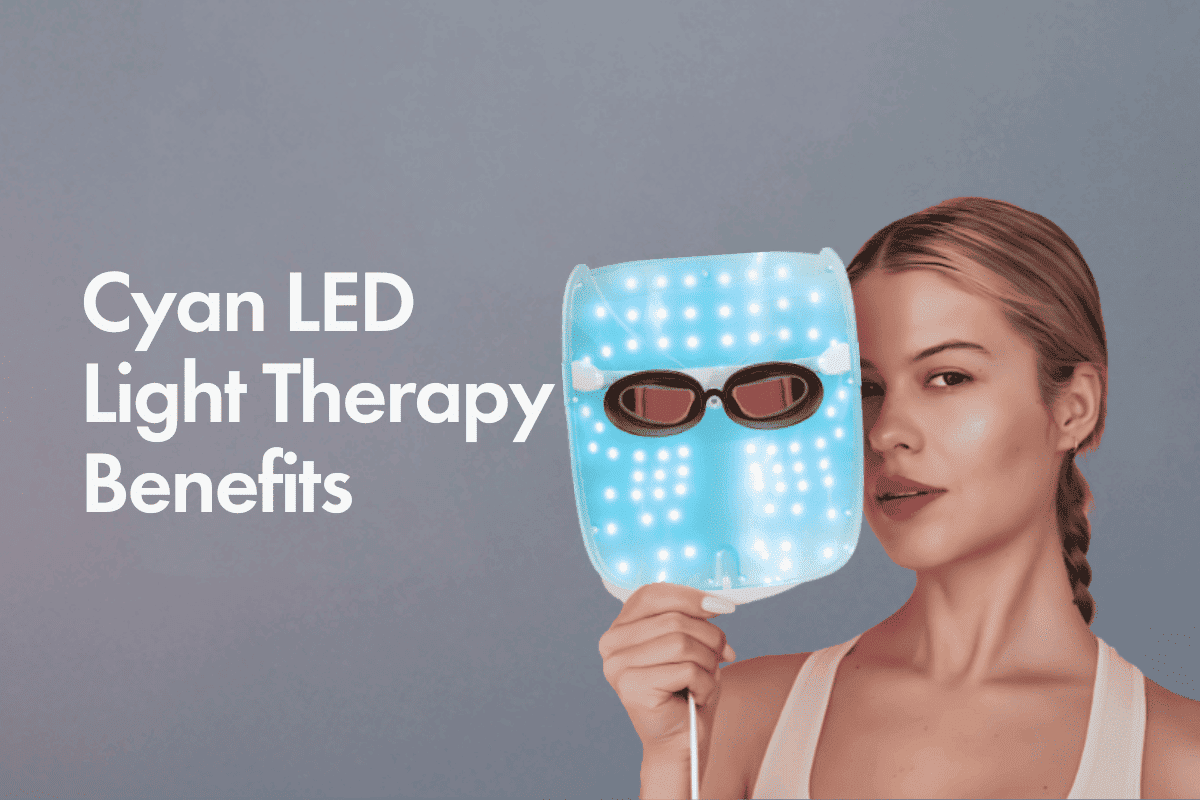

Cyan light doesn’t get the hype it deserves. Stuck between blue and green, it’s often overlooked—but it shouldn’t be.
This underrated LED therapy helps with redness, acne, inflammation, and even mood. It’s like the cool, collected sibling of blue light, offering a gentler but just as effective approach.
So, if you’re wondering how cyan stacks up against light blue, let’s get into it.
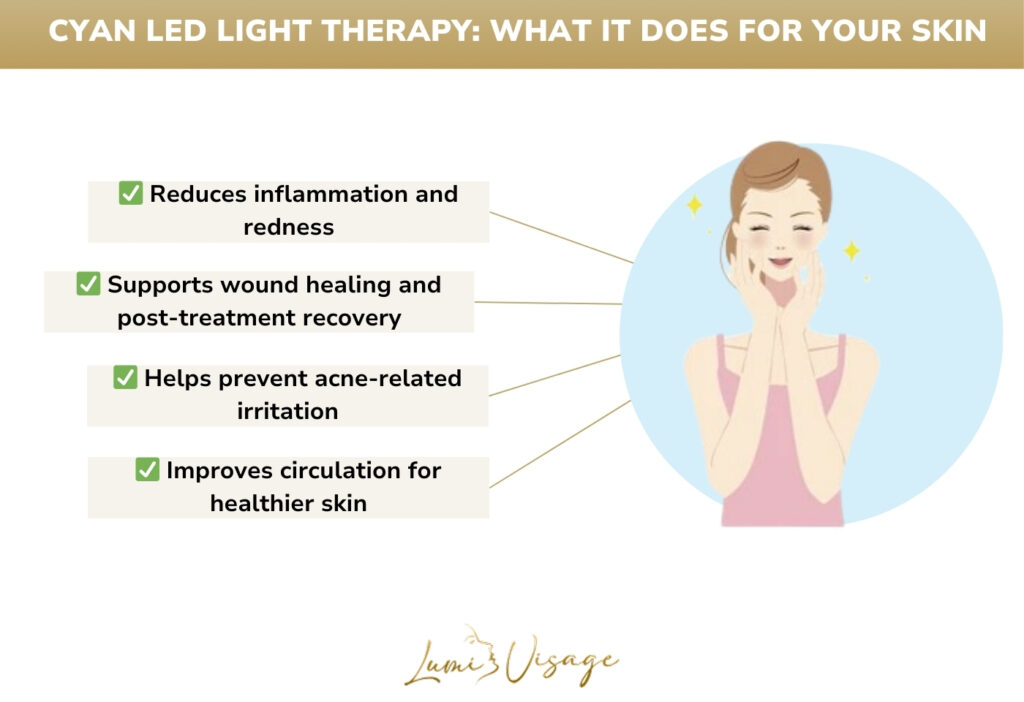
- Cyan LED light reduces inflammation, supports healing, and may improve mood.
- It’s gentler than blue light, making it ideal for sensitive or redness-prone skin.
- Cyan light promotes circulation, helping with acne, wound healing, and even bone recovery.
- Unlike light blue, cyan focuses on calming skin rather than aggressively targeting bacteria.
Understanding Cyan LED Light Therapy
Cyan light falls in the 490–520 nm wavelength range, sitting between blue and green.
Unlike deep blue light, which is primarily known for its acne-fighting properties, cyan light has a broader effect that includes reducing inflammation and promoting skin recovery.
When cyan light penetrates the skin, it interacts with cellular processes that influence inflammation, circulation, and even nervous system activity. This makes it a valuable option for people looking to manage acne, redness, or certain types of chronic pain.
Skin Health Benefits
Acne Prevention and Treatment
Cyan light is often used in skincare for its antibacterial properties.
It can target acne-causing bacteria while being gentler on the skin compared to harsher treatments. Many people who experience irritation from blue light therapy find cyan light to be a better alternative.
Beyond bacteria, cyan light can help with the redness and swelling that often accompany breakouts.
By reducing inflammation, it can make active acne less noticeable while also preventing post-inflammatory hyperpigmentation.
Wound Healing and Skin Repair
The body’s natural healing process relies on proper circulation and cell communication.
Cyan light supports these functions by encouraging oxygen flow to damaged tissues, speeding up recovery times. This makes it useful for minor wounds, post-procedure skin healing, and even sun damage repair.
Some studies suggest that cyan light can also help with conditions like rosacea by calming inflamed skin and reducing visible redness.
Psychological and Neurological Benefits
Psychological and Neurological Benefits
Light exposure plays a key role in how we feel.
While bright blue light is known to boost energy and alertness, cyan light has a milder effect that can still lift mood without being overstimulating.
People who experience anxiety or stress-related skin conditions may benefit from using cyan light therapy in the evening, as it helps create a sense of calm without interfering with melatonin production the way harsh blue light does.
Support for Brain Recovery
Some early research suggests that certain wavelengths of light, including cyan, could play a role in supporting brain function after injury.
Because cyan light promotes circulation and reduces inflammation, it has the potential to aid in recovery from concussions or other mild traumatic brain injuries.
Though more research is needed in this area, the idea that specific light frequencies can support healing processes is becoming an area of interest for scientists studying neuroplasticity and recovery.
Additional Health Benefits
Bone Healing
Studies on light therapy and tissue repair have found that different wavelengths can affect bone regeneration.
Cyan light, in particular, has been looked at for its role in improving blood flow to healing bone fractures, which may help speed up recovery times.
Cellular Energy and Metabolism
At a cellular level, exposure to light can influence how efficiently mitochondria produce energy.
Cyan light may help stimulate these energy-producing processes, which can lead to improved skin renewal, better muscle recovery, and even increased collagen production over time.
Cyan vs Light Blue: What’s the Difference?
A common question is how cyan light compares to light blue in terms of therapeutic effects.
While the two colors look similar, they have distinct differences in function:
- Light blue LED therapy (around 470 nm) is more commonly associated with acne treatment and antibacterial properties. It works by producing reactive oxygen species that break down acne-causing bacteria.
- Cyan LED therapy (490–520 nm) focuses more on reducing inflammation, promoting circulation, and calming the nervous system. It has a gentler approach, making it ideal for sensitive skin or those prone to redness.
| Feature | Cyan LED Light (490–520nm) | Light Blue LED Light (~470nm) |
|---|---|---|
| Main Benefit | Calms inflammation, supports healing | Targets acne-causing bacteria |
| Best For | Redness, sensitive skin, circulation | Breakouts, oil control |
| Skin Sensitivity | Gentle, soothing | Can be drying for some |
| Additional Benefits | May help with mood & muscle recovery | Strong antibacterial effects |
Safety Considerations and Potential Side Effects
Cyan LED light therapy is considered safe for most skin types, but there are a few things to keep in mind:
- Eye Sensitivity: Because cyan light falls in a range that can be more noticeable to the human eye, some people may experience mild discomfort when using it for extended periods. Protective eyewear can help reduce strain.
- Skin Reactions: While rare, some individuals may experience mild irritation if they have particularly sensitive skin. Starting with shorter exposure times and gradually increasing duration can help.
If you have any existing skin conditions or concerns, it’s always best to check with a dermatologist before starting LED light therapy.
Integrating Cyan LED Light Therapy into Your Routine
If you’re interested in trying cyan light therapy, there are a few ways to incorporate it into your skincare and wellness routine:
At-Home Devices
Many LED masks and handheld devices now offer cyan light settings alongside red, blue, and other wavelengths.
When choosing a device, look for one with adjustable intensity levels to find what works best for your skin.
Professional Treatments
Spas and dermatology clinics often provide LED light therapy as part of facials or post-procedure care.
If you’re dealing with acne, inflammation, or sensitive skin, ask if they offer cyan light as an option.
Usage Recommendations
For best results, consistency is key. Most people see improvements after a few weeks of regular use. A good starting point is 10–15 minutes per session, three to five times a week.
Tired Of Red, Irritated Skin That Won’t Settle Down?
Cyan LED therapy can help calm, heal, and restore your skin

Frequently Asked Questions
Can cyan LED light therapy help with eczema or psoriasis?
While not a cure, cyan light may help reduce inflammation and itching associated with these conditions.
Does cyan LED light affect sleep like blue light does?
Unlike harsh blue light, cyan light has a milder effect and is less likely to disrupt melatonin production.
How long does it take to see results from cyan LED therapy?
Some people notice reduced redness within days, but consistent use over weeks yields the best results.
Can I combine cyan LED light therapy with other skincare treatments?
Yes, it pairs well with serums, moisturizers, and even other LED colors for a customized routine.
Does natural sunlight provide the same benefits as cyan LED therapy?
Sunlight contains cyan wavelengths, but controlled LED therapy offers targeted benefits without UV exposure.
Conclusion
Cyan LED light therapy is a game-changer for anyone dealing with redness, inflammation, or sensitive skin. It works beneath the surface to calm irritation, support healing, and even boost circulation.
Unlike harsh blue light, it’s gentle enough for daily use while still delivering real results.
If you’ve been looking for a way to soothe your skin without harsh treatments, cyan light might be exactly what you need.
Ready to try it for yourself? The Lumi Visage 7-Color LED Face Mask includes a cyan light setting, giving you professional-level therapy from the comfort of home. Take control of your skincare and start seeing the benefits today. Get yours now!