


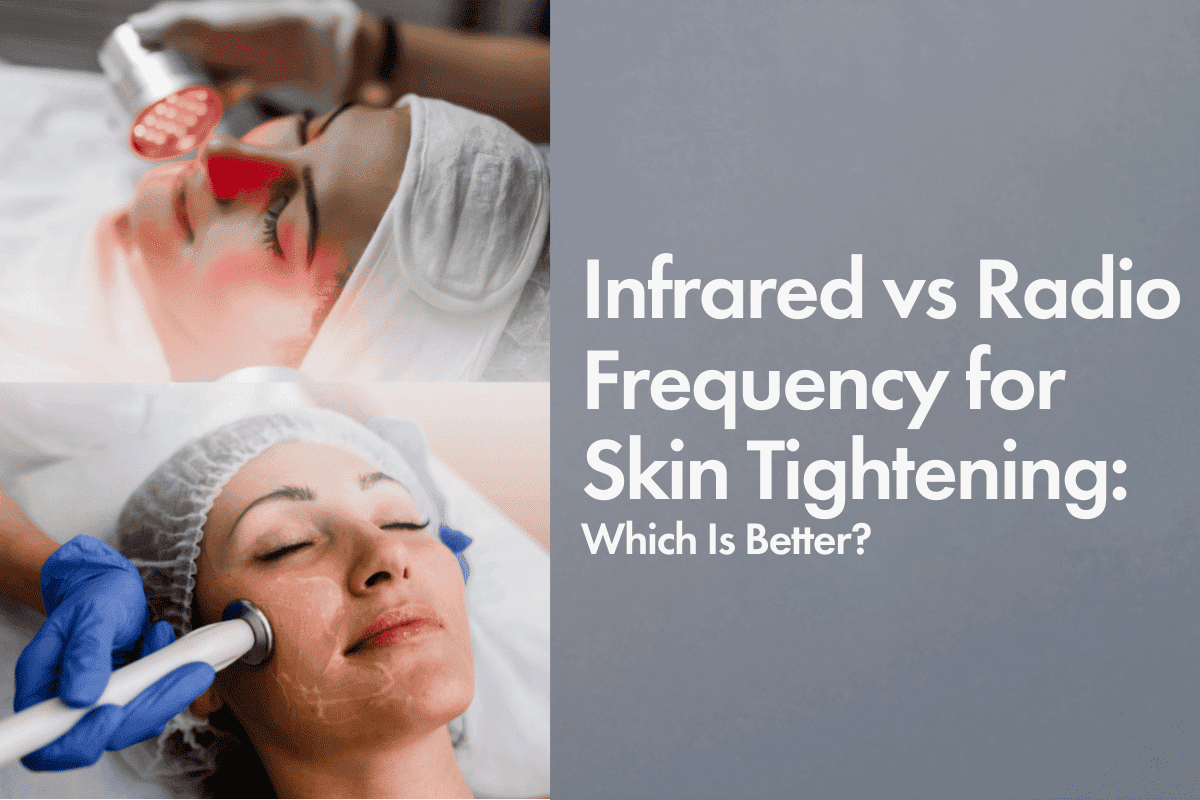

Non-surgical skin tightening is a game-changer for refreshing your look without downtime.
But with so many options, it’s tough to know what’s best. Infrared and radio frequency are two top contenders, each with unique benefits.
So, which one gives the results you’re after?
We’ll break it all down to help you decide—and feel confident about your choice.
- Infrared targets surface layers; radio frequency penetrates deeper for significant tightening.
- Both treatments stimulate collagen, but results vary by severity of skin concerns.
- RF suits larger areas, while infrared is ideal for delicate spots like the face.
- Results require multiple sessions and vary based on technology and practitioner skill.
Comparison: Infrared vs. Radio Frequency
| Criteria | Infrared | Radio Frequency |
|---|---|---|
| Depth of Treatment | ✔️ Ideal for surface layers (fine lines, mild sagging) | ✔️ Penetrates deeper (severe laxity, thicker areas) |
| Comfort | ✔️ Warm sensation, minimal discomfort | ❌ More intense heating, possible discomfort |
| Side Effects | ✔️ Mild, temporary redness or swelling | ❌ Slightly higher risk of discomfort or irritation |
| Results and Longevity | ✔️ Gradual improvements over time | ✔️ More dramatic results for significant laxity |
| Target Areas | ✔️ Best for smaller areas (face, neck) | ✔️ Effective on larger areas (abdomen, thighs, arms) |
Understanding Infrared Skin Tightening
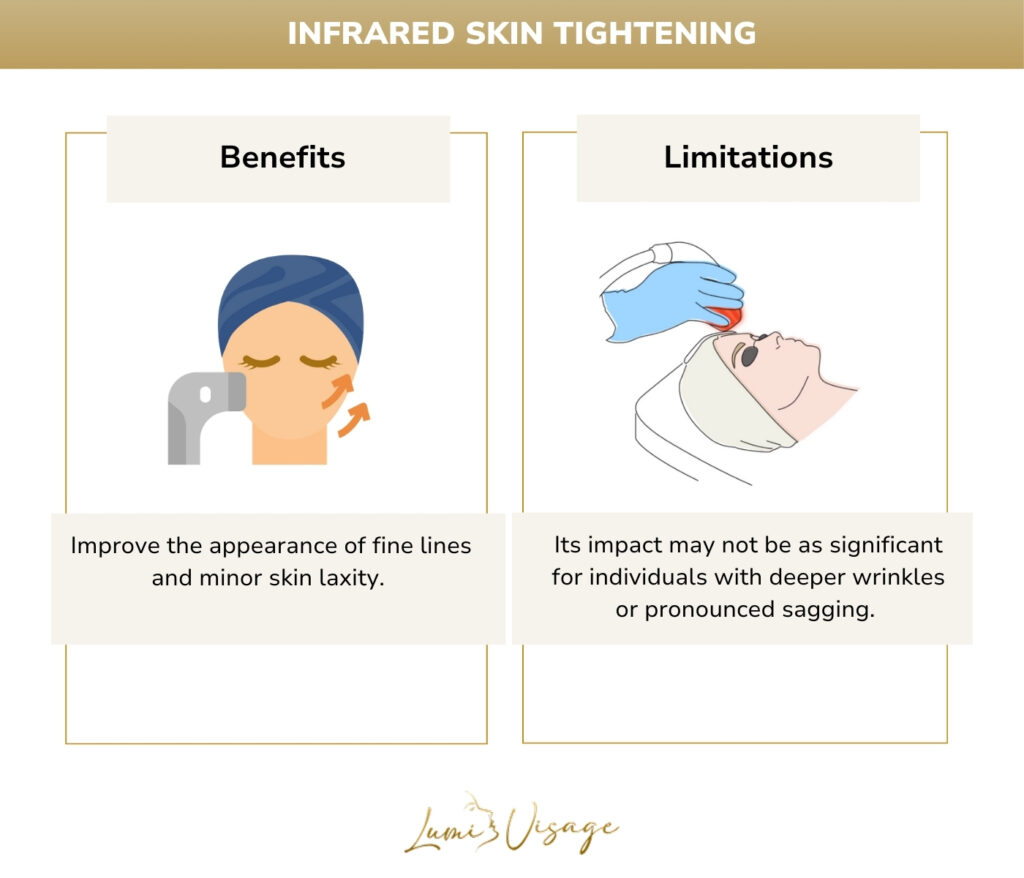
Infrared skin tightening uses light energy to stimulate collagen production in the skin. This light penetrates the outer layers, generating heat in the dermis without harming the skin’s surface.
The heat triggers the body’s natural healing response, encouraging the production of new collagen and elastin fibers.
Benefits of Infrared Skin Tightening
One of the standout features of infrared technology is its ability to improve the appearance of fine lines and minor skin laxity. Many people report smoother skin texture and a subtle lift after a series of treatments.
It’s particularly effective for targeting smaller areas like the face and neck, where more superficial tightening is needed.
Limitations of Infrared
While effective, infrared light primarily targets the skin’s outer layers. This means its impact may not be as significant for individuals with deeper wrinkles or pronounced sagging.
Additionally, some users experience temporary redness or minor swelling after a session.
Understanding Radio Frequency Skin Tightening
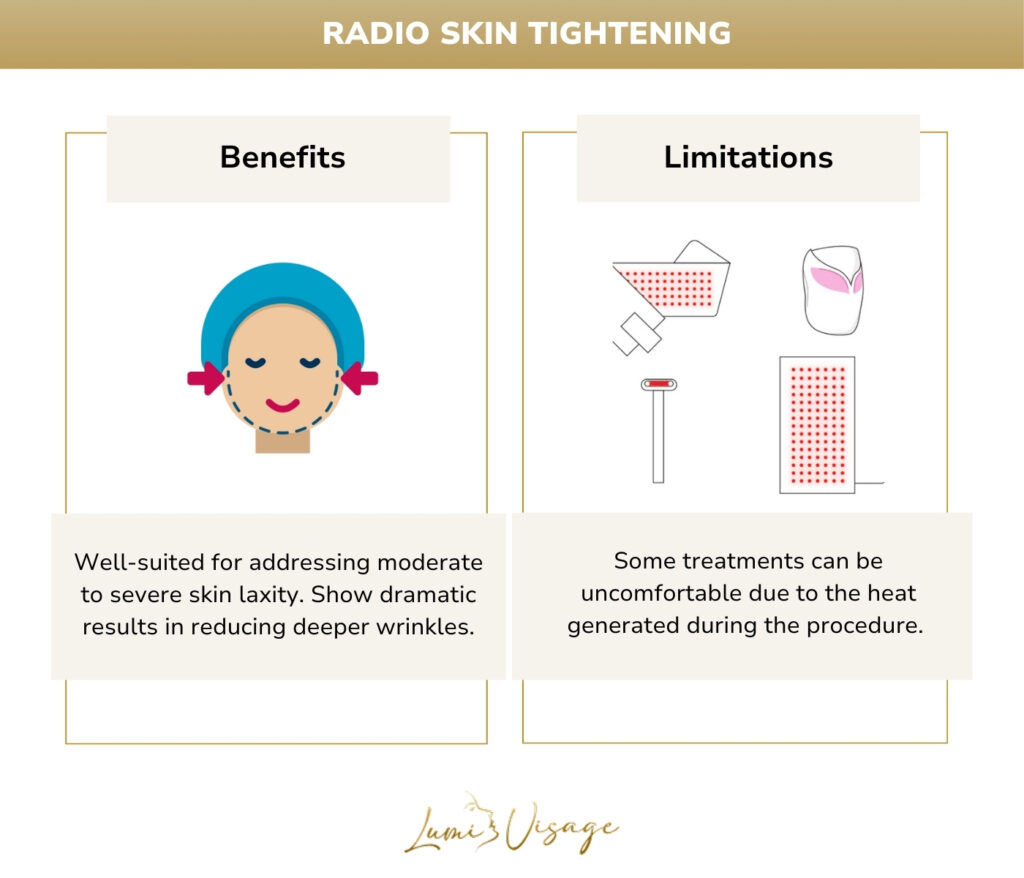
Radio frequency (RF) technology works differently. Instead of light, it uses electromagnetic waves to heat the deeper layers of the skin.
By targeting tissues beneath the surface, RF stimulates collagen remodeling and tightens the skin from the inside out.
Benefits of Radio Frequency Skin Tightening
Radio frequency is well-suited for addressing moderate to severe skin laxity. Its deeper penetration makes it an effective option for areas like the abdomen, thighs, and upper arms, where thicker layers of skin require more intensive treatment.
Additionally, RF treatments often show more dramatic results in reducing deeper wrinkles and improving skin elasticity.
Limitations of Radio Frequency
Despite its effectiveness, RF isn’t without drawbacks.
Some treatments can be uncomfortable due to the heat generated during the procedure.
Infrared vs Radio Frequency: Side-by-Side Comparison
Depth of Treatment
Infrared primarily works on the skin’s outer layers, making it ideal for fine lines and mild sagging.
Radio frequency, on the other hand, penetrates deeper, providing more robust results for severe laxity and thicker areas of skin.
Comfort and Side Effects
Both treatments are non-invasive, but the sensations they produce differ. Infrared treatments can feel warm, while RF treatments often involve a more intense heating sensation.
Side effects for both are generally mild, such as temporary redness or slight swelling, but RF may involve a greater risk of discomfort during the session.
Results and Longevity
Infrared treatments often require multiple sessions to achieve noticeable results, with effects becoming more apparent over time.
RF treatments also require multiple sessions but tend to deliver more dramatic improvements, especially in areas with deeper wrinkles or more significant skin laxity.
Both options offer results that can last for several months to a few years, depending on maintenance and individual factors.
Target Areas
Infrared is particularly effective for smaller, more delicate areas like the face and neck. RF excels in larger areas where deeper tightening is needed, such as the abdomen, thighs, and upper arms.
Choosing the Right Treatment
The choice between infrared and radio frequency skin tightening depends on several factors:
Skin Type and Condition
If you’re dealing with early signs of aging, such as minor fine lines or mild laxity, infrared treatments may be sufficient to achieve the desired results.
For deeper wrinkles or significant sagging, RF is likely a better option due to its ability to penetrate further into the skin’s layers.
Personal Goals
Consider what you’re hoping to achieve.
For a subtle lift and improvement in skin texture, infrared might be the right choice. If you’re looking for more dramatic changes, particularly on larger body areas, RF could provide the results you’re seeking.
Consultation with Professionals
A consultation with a qualified practitioner is essential. They can evaluate your skin and recommend the most suitable treatment plan based on your individual needs.
Practitioners can also explain the specifics of the devices they use, as results can vary depending on the technology.
Cost Considerations
The cost of treatments varies widely depending on the provider, location, and number of sessions required.
Generally, RF treatments can be more expensive due to their advanced technology and deeper penetration, but both options require multiple visits to achieve and maintain result
Can’t Decide Between Infrared and RF?
Our mask brings targeted tightening right to your home
SHOP NOW – GET $100 OFF
Frequently Asked Questions
How soon can I see results after infrared or radio frequency treatments?
Results vary, but many notice subtle improvements after a few sessions, with optimal results appearing over weeks or months as collagen production increases.
Can these treatments be used on all skin tones?
Yes, both infrared and radio frequency are generally safe for all skin tones, as they don’t rely on targeting melanin like some laser treatments do.
Are the results from these treatments permanent?
While the effects are long-lasting, they aren’t permanent. Maintenance sessions are usually needed every 6–12 months to sustain results.
Do these treatments hurt?
Most patients describe infrared treatments as a warm sensation, while RF can feel more intense but is still tolerable. Some devices may include cooling features to enhance comfort.
Can these treatments address cellulite or stretch marks?
Radio frequency is sometimes used for improving the appearance of cellulite and stretch marks by tightening underlying tissues, though results can vary by individual.
Conclusion
Choosing between infrared and radio frequency for skin tightening depends on your specific goals.
Infrared offers subtle improvements for delicate areas, while radio frequency tackles deeper tightening and larger areas.
Both treatments are effective ways to boost collagen and improve skin firmness. If you’re looking for an at-home solution, our 7 Color LED Face Mask combines advanced technology to support your skin’s health and vitality.
Ready to elevate your skincare routine? Buy yours today!